The tourism that invented the Costa del Sol: architecture and summer living since the 1960s
In the mid-twentieth century, the stretch of coast between Málaga and Estepona was a succession of fishing villages, farmsteads and unnamed beaches. Within fifty years it had become one of the most recognised tourist destinations in the world. That process of transformation was built, literally, by the architects who worked here.
Mass tourism on the Costa del Sol was not a spontaneous phenomenon. It was the result of deliberate policy and the convergence of several factors that came together during the 1950s: Spain's opening to the outside world after autarky, the growth of the European middle class, and the discovery of Mediterranean sunshine as an economic resource. The Ministry of Information and Tourism, created in 1951, actively promoted the construction of hotels and the marketing of the country abroad. The Costa del Sol was one of its major bets.
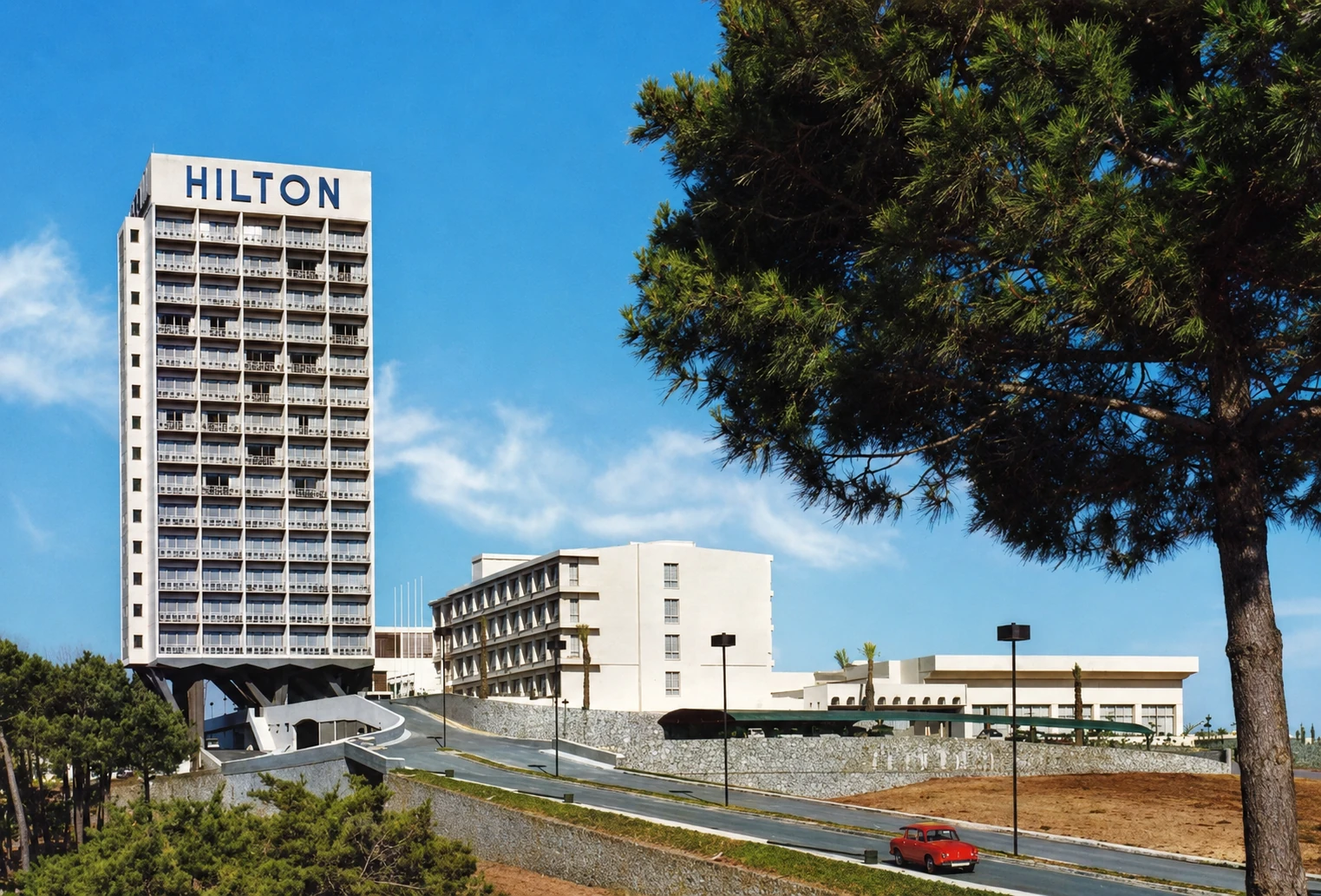
The first hotels in the area — those that established the model that would be repeated for decades — were built from the mid-1950s onwards. Torremolinos was the laboratory: the first resort to be transformed beyond recognition. Marbella followed a different path, more selective from the outset. Prince Alfonso of Hohenlohe and his Marbella Club established in the 1950s the tone of exclusivity that would define the upper end of the market for generations.
The architects who built the coast
Building on the Costa del Sol in the 1960s was an adventure. There were almost no local precedents, materials were difficult to obtain, engineers were scarce, and the programme — a luxury hotel with pool, gardens and sports facilities — was a completely new typology for Spanish architecture of the time. The practices that consolidated themselves during those years learned to solve problems that were not in any textbook.
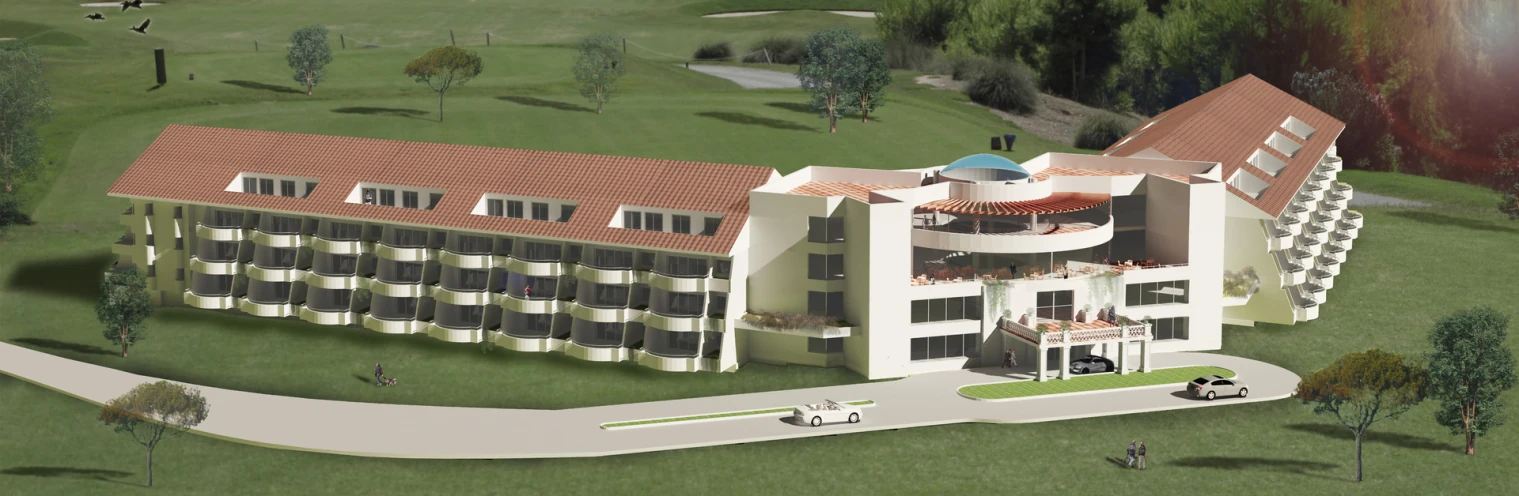
It was also a moment of enormous formal freedom. International post-war architecture — late Rationalism, Organicism, Brutalism in its softer variants — arrived in Spain with some delay but with all its energy intact. The hotels, apartment buildings and residential developments on the Costa del Sol of the 1960s and 1970s are an extraordinary catalogue of typological experimentation: fan-shaped tower blocks to maximise sea views, bungalows integrated into the topography, complexes that blended Andalusian vernacular architecture with the languages of the Modern Movement.
"The Costa del Sol of the 1960s was a testing ground. There were no precedents: everything had to be invented."
The transformation of the landscape
The speed of transformation was extraordinary and, in retrospect, brutal for some stretches of coastline. Between 1960 and 1975, the Málaga coastline accumulated more built floor area than in all previous centuries combined. Fishing villages were buried under apartment blocks. Virgin beaches were urbanised. The N-340 road became the backbone of a continuous built strip that today, seen from the air, is difficult to believe took so little time to form.
Not everything was disaster. During that same period some of the most interesting buildings in twentieth-century Spanish architecture were also constructed, unjustly forgotten today: hotels of extraordinary design quality, residential developments that resolved with elegance the difficult relationship between building and Mediterranean landscape, high-quality public spaces in the historic centres of Marbella, Nerja and Frigiliana. The architectural history of the Costa del Sol is not only the history of the mistakes of the development boom: it is also the history of a generation of professionals who worked under difficult conditions and often achieved admirable results.
From hotel to villa: the evolution of residential tourism
From the 1980s onwards, the profile of the tourist client on the Costa del Sol began to change. Hotel tourism — mass and short-stay — remained the dominant segment, but a new model was growing strongly: the foreign client, mainly British, German and Scandinavian, who bought a second home to come for several months each year. They did not want a hotel. They wanted their own house.
That transition from hotel tourism to residential tourism transformed the architectural demand in the area. Apartment blocks gave way to townhouse developments and, later, to individual villas. The brief grew richer as the purchasing power of the buyer increased: private pool, garden, garage, separate living and dining rooms, open-plan kitchen. By the 1990s and 2000s, the standard for international buyers already included home automation, integrated air conditioning and, increasingly, a heated pool or private spa.
The ultra-premium segment — villas of more than two million euros in Marbella, Benahavís or Estepona — is today the market that most drives architectural innovation in the area. The client who reaches this segment has global references, has visited properties in the Caribbean, in Dubai, in Tuscany and in the Alps. They arrive with very precise ideas and demand an architectural response of equivalent ambition.
Sustainability as the new frontier
Twenty-first-century tourism on the Costa del Sol faces a contradiction that we as architects have an obligation to name: the tourism industry sells landscape, climate and nature, but its traditional construction model has degraded precisely those resources. The tourist comes for the Mediterranean and for the light, but the overcrowding of the coast has eroded the quality of the landscape that makes the area attractive.
The most advanced projects being developed today on the Costa del Sol incorporate responses to that problem: bioclimatic architecture that dramatically reduces energy consumption, landscape integration that returns part of the natural value to the built environment, mobility solutions that reduce dependence on the private car. This is not an exercise in good intentions: it is a rational response to the evidence that without landscape there is no tourism, and without tourism there is no local economy.
The Costa del Sol that exists today is the result of seventy years of intensive construction — sometimes brilliant, sometimes lamentable. The architects who work here are the heirs of that process: of its achievements and its mistakes. Understanding that history is not a nostalgic exercise; it is the only way to build the next chapter with judgement.
Do you own a hotel or a building with tourism potential? Discover our hotel and tourist accommodation service in Málaga.