Durable materials for homes near the sea: what lasts and what doesn't
Building within two kilometres of the Mediterranean imposes conditions that simply do not exist inland: salt spray depositing on every surface, high-intensity ultraviolet radiation for more than three thousand hours per year, humidity cycles that shift sharply between the dry summer and the rainy autumn, and winds that carry salt up to the highest elevations of the coastal sierras. Materials that last decades in Madrid deteriorate within a few years on the Costa del Sol's seafront if they have not been correctly specified.
Structure and concrete: the foundation must be sound
Reinforced concrete in a marine environment is classified in the EHE-08 structural concrete code as exposure class XS2 or XS3 depending on distance from the sea and wave exposure. In practice, this means a minimum cover of 40 mm over reinforcement bars (versus 30 mm in interior or urban environments), the use of sulphate-resisting or pozzolanic cement, and a maximum water/cement ratio of 0.45 to guarantee concrete density.
Where the environment is particularly aggressive — front-line beach positions, above the tidal zone, or areas with persistent sea mist — we recommend epoxy-coated reinforcement bars or, for singular structural elements, glass fibre reinforced polymer (GFRP) bars that are completely immune to corrosion. The additional cost is 15–20%, but the difference in structural service life can be decades.
Façades and external render
Painted cement render — the most common finish on the Costa del Sol — is the worst performer in a marine environment. The carbonation of the lime, combined with salt deposition and wet/dry cycles, causes cracking within a few years that allows water ingress. Acrylic renders painted in glossy white add the problem of UV reflection, which degrades the polymer itself.
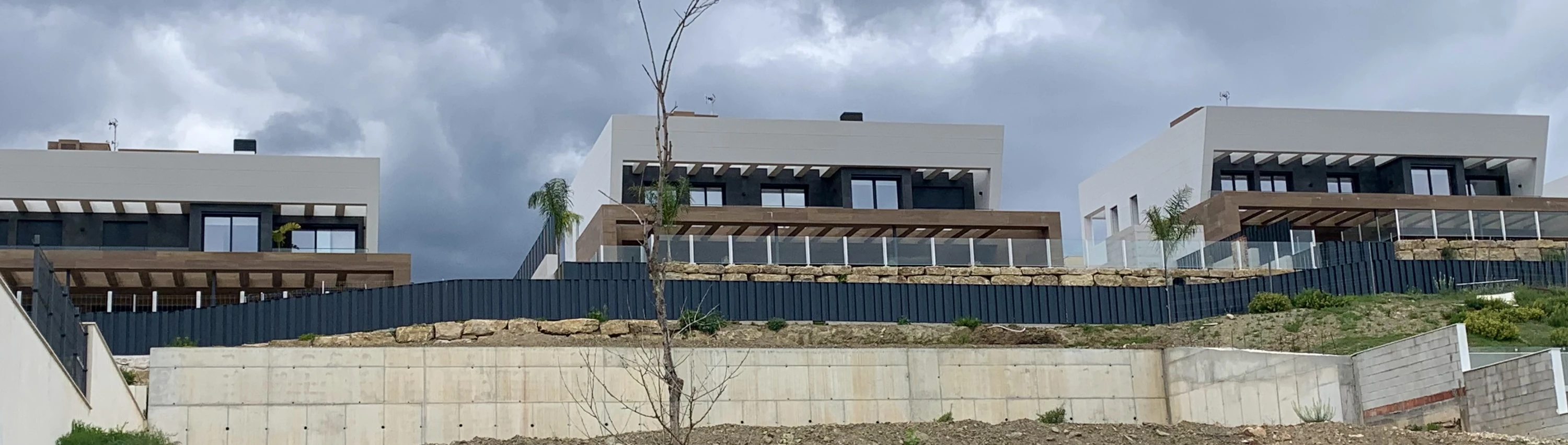
The most durable alternatives are silicate renders (potassium silicate), which mineralise with the substrate to form a chemical bond rather than a surface coating; single-coat render with marble aggregate; and natural stone cladding — limestone, travertine, granite — which requires no paint and ages with dignity. Fibre cement with a marine coating — commonly used in Nordic architecture and shipbuilding — is gaining ground in high-end projects for its resistance and the range of formats and finishes available.
The greatest cost of a coastal property is almost always the deferred maintenance of materials that were poorly specified from the outset.
Exterior joinery: aluminium, timber and steel
Aluminium with standard powder coating (Class 2, per UNE-EN 12206) deteriorates visibly in front-line marine environments within 8–12 years. For marine environments, the correct standard is marine-grade anodising (Class 20 or 25, with an oxide thickness ≥ 20 µm) or Class 3 coating with chromate primer. Fittings and fixings must be AISI 316 stainless steel (marine grade), not AISI 304, which suffers intergranular corrosion in chlorinated environments.
Hardwood — teak, iroko, cumaru — used in terrace decking and pergolas has natural durability Class 1 or 2 per the European standard, meaning it can withstand exposure to the elements for decades with minimal maintenance: a protective oil applied every one to two years. Softwood pressure-treated to Class 4 resists ground contact and moisture, but in direct marine exposure it degrades at the surface layer. Avoid in all cases untreated timber or conventional glossy varnish, which peels within two years.
Corten steel — patinated weathering steel — forms an oxide layer that acts as protection and does not progress under conditions with alternating wet and dry cycles. However, in front-line positions with persistent salt mist, the cycle does not complete correctly and oxidation can become active. In this case, AISI 316 stainless steel or zinc-titanium are the most durable options for non-structural façade elements.
Pools in a coastal environment
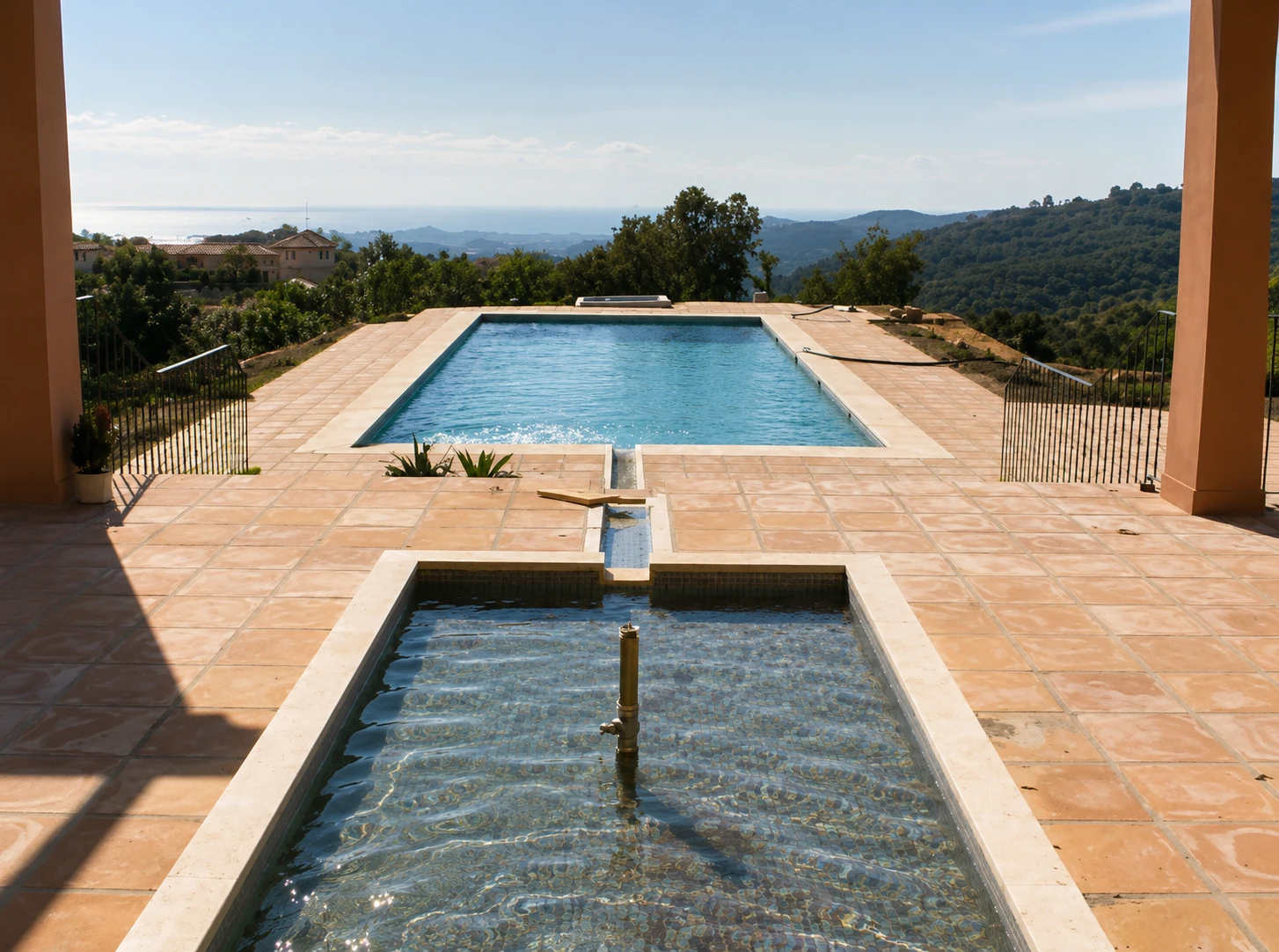
A well-built pool on the Costa del Sol can last decades without structural problems if the waterproofing process is correct. The main options: reinforced concrete with sprayed polyurea waterproofing (the most resistant and fastest to apply) or with a fibreglass membrane laminated in situ. Both resist sea salt and the chlorine or salt electrolysis treatment perfectly. Vinyl liner is the most economical option but requires replacement every 10–15 years and is not compatible with very windy environments or heavy user traffic.
Flat roofs
The flat roof is the most exposed element of a coastal building: direct radiation, thermal expansion and contraction of up to 80°C in summer on a dark surface, and potentially intense rainfall during cold-drop episodes. A 1.5 mm PVC or TPO membrane with UV protection has a service life of 25–30 years when correctly installed. Two-layer bituminous membranes with gravel protection are also valid. What to avoid is waterproofing paint as a standalone solution: it may last 2–3 years but is not a definitive solution.
Maintenance programme for coastal properties
Annual inspection should cover: joinery (seals, fittings, hardware), roof (sumps, expansion joints, membrane condition), grilles and galvanised steel elements. Every five years: repaint or re-coat joinery, check terrace and balcony waterproofing, inspect the condition of façade renders. Every ten years: consider replacing silicone façade seals, inspect the condition of any steel structure, consider renewing air conditioning and plumbing systems. A well-executed maintenance plan can double or triple the service life of a coastal property compared with a building left to look after itself.
Thinking about building or renovating a home on the Costa del Sol? Discover our detached homes and villas service in Málaga.