Earthworks at El Madroñal: ten months to prepare the ground
The earthworks phase for Villa Hope in El Madroñal is complete. Ten months of intensive work on a steeply sloping hillside — clearing, road-building, rock trenching and stepped ecological retaining walls — have transformed the plot and left it ready to receive the structure of the two villas. We take stock of a phase that will not be visible in the finished photographs, but that determines everything.
El Madroñal · Benahavís · July 2025 – May 2026The starting point
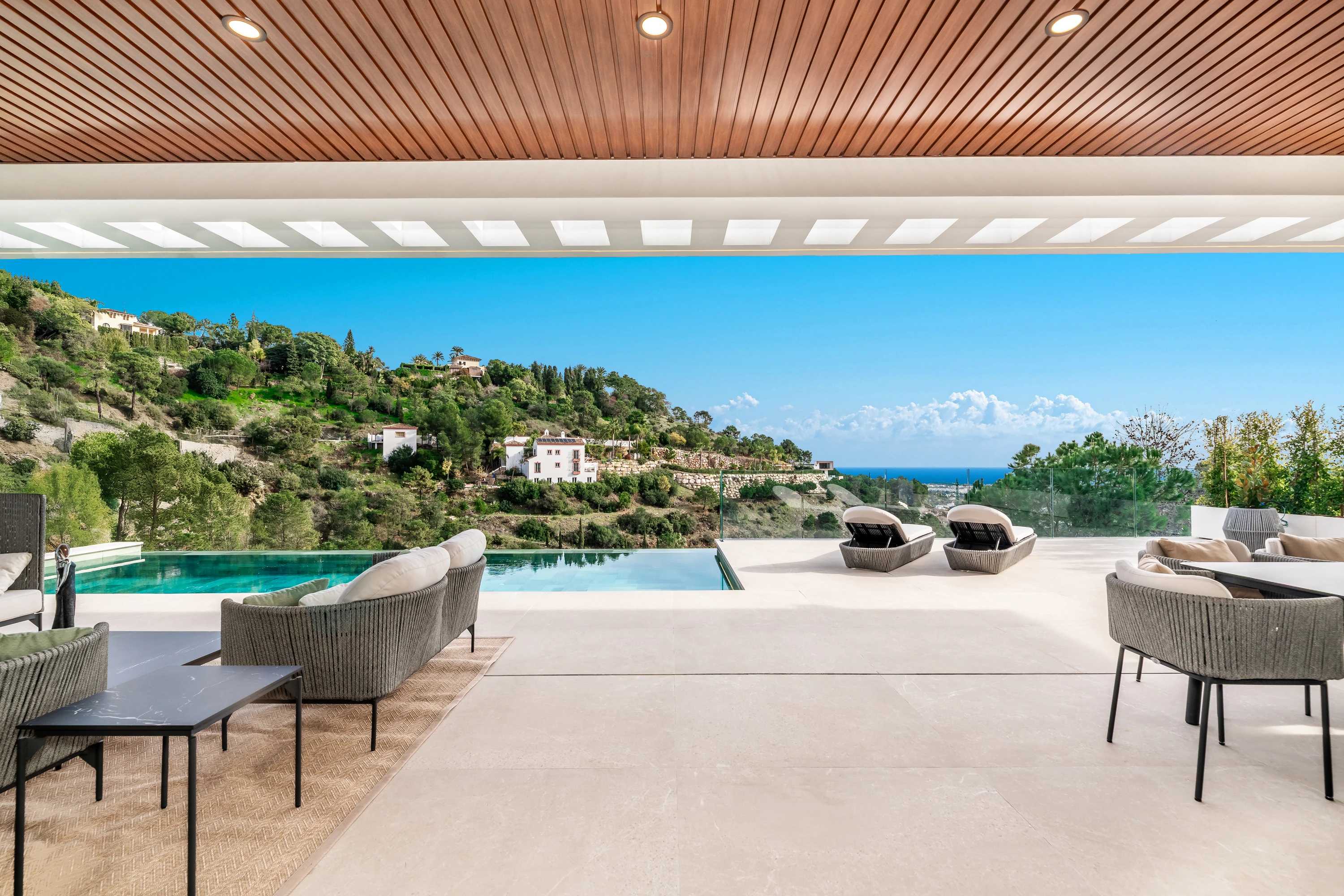
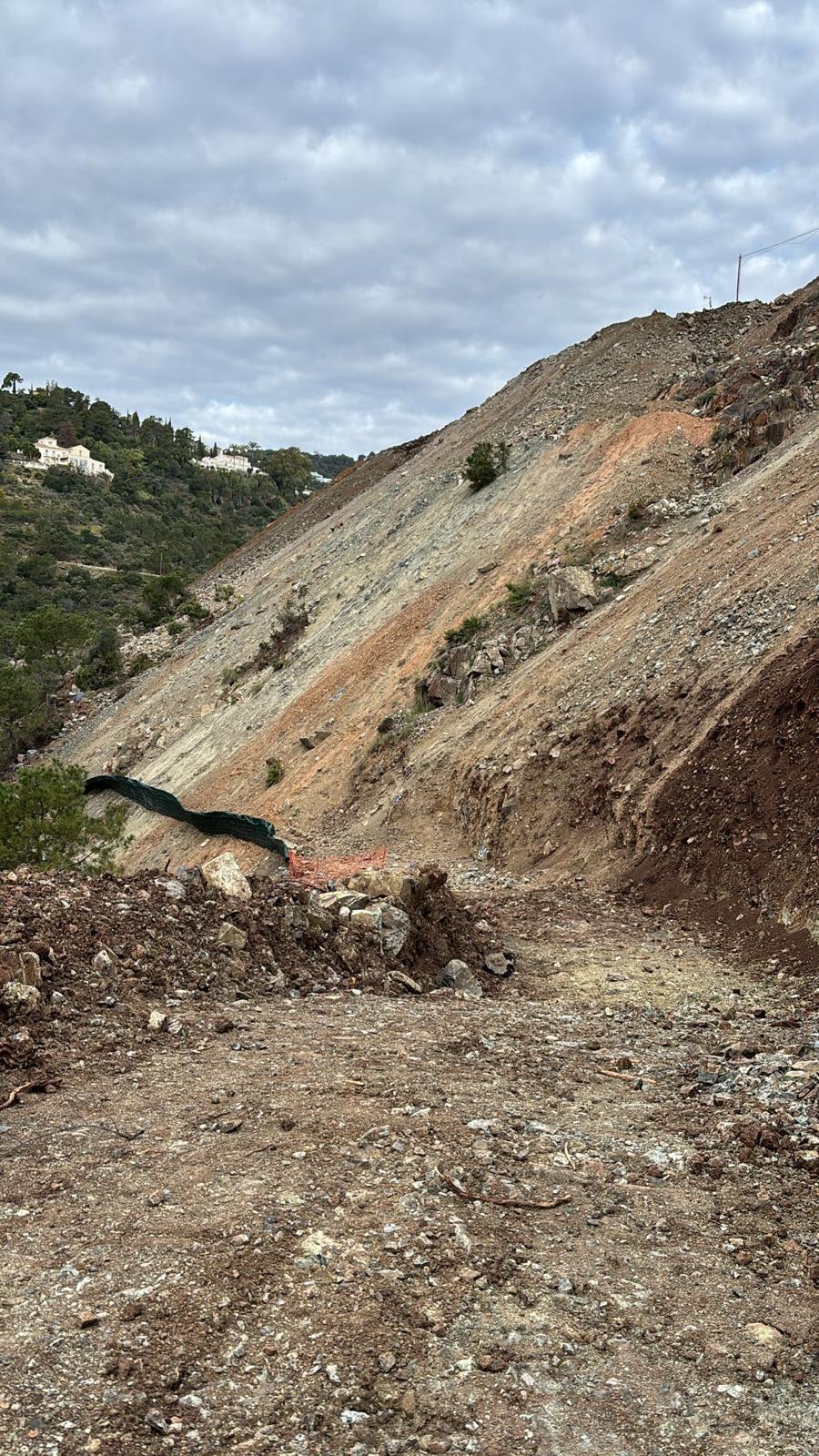
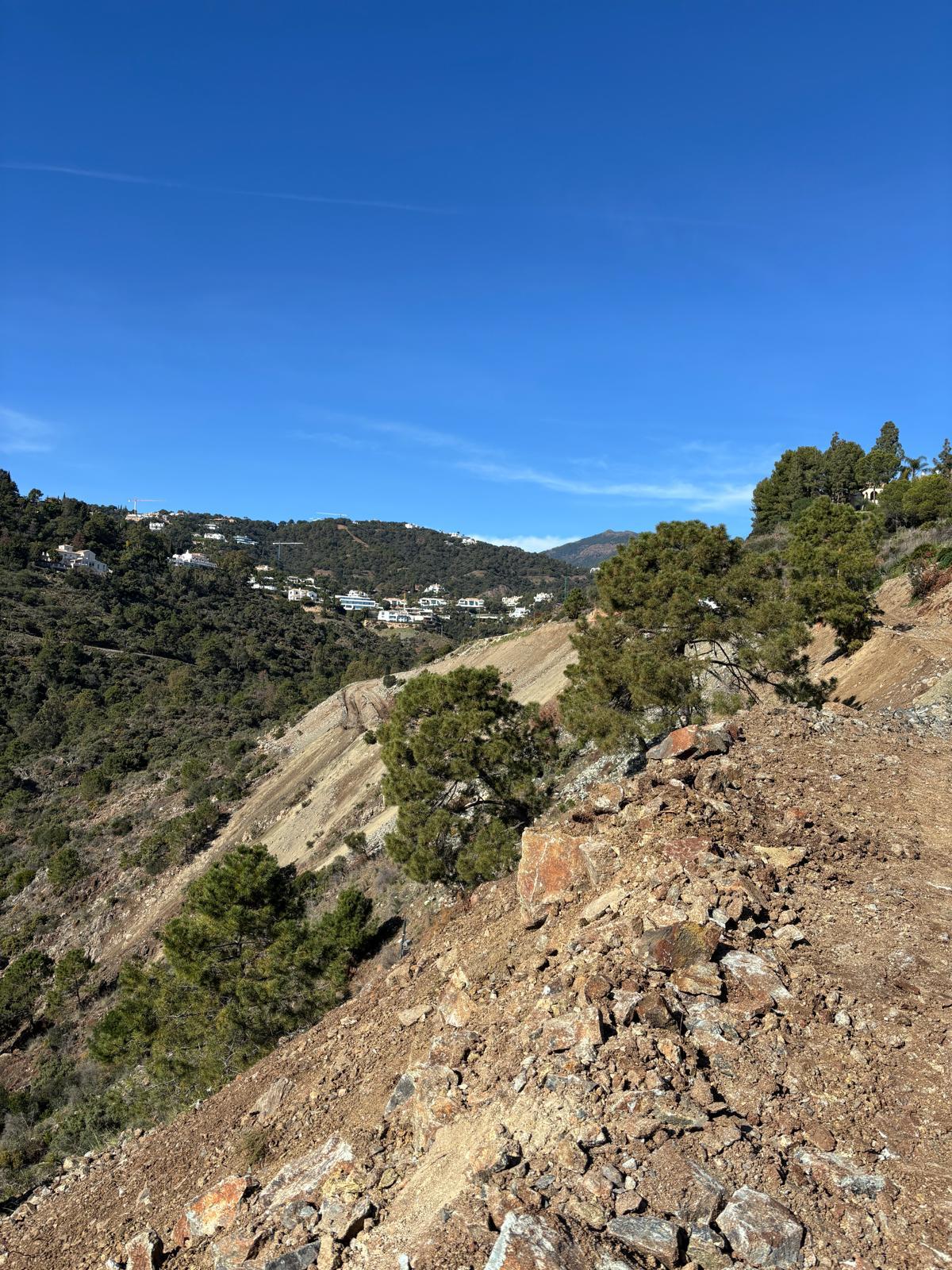
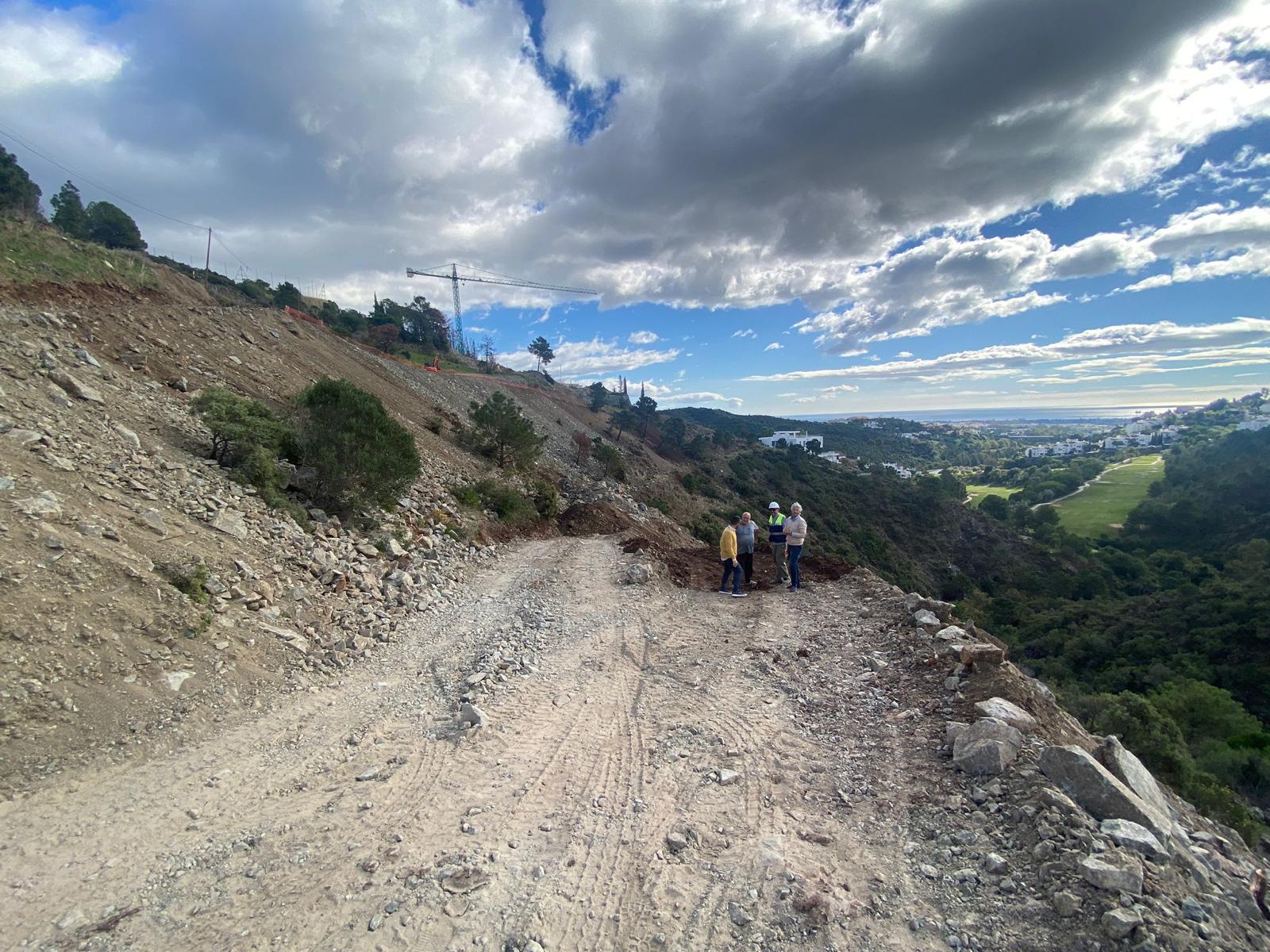
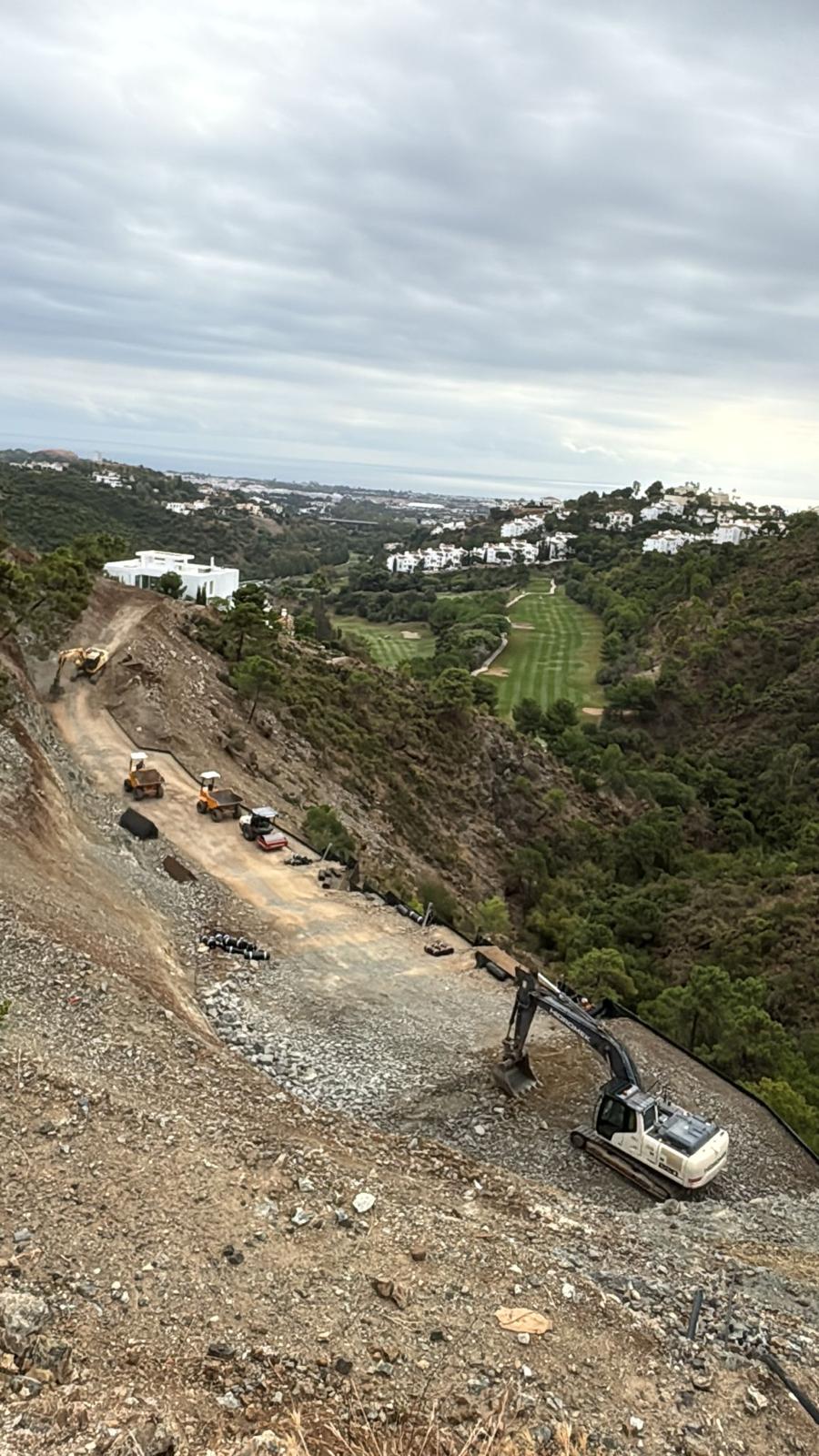
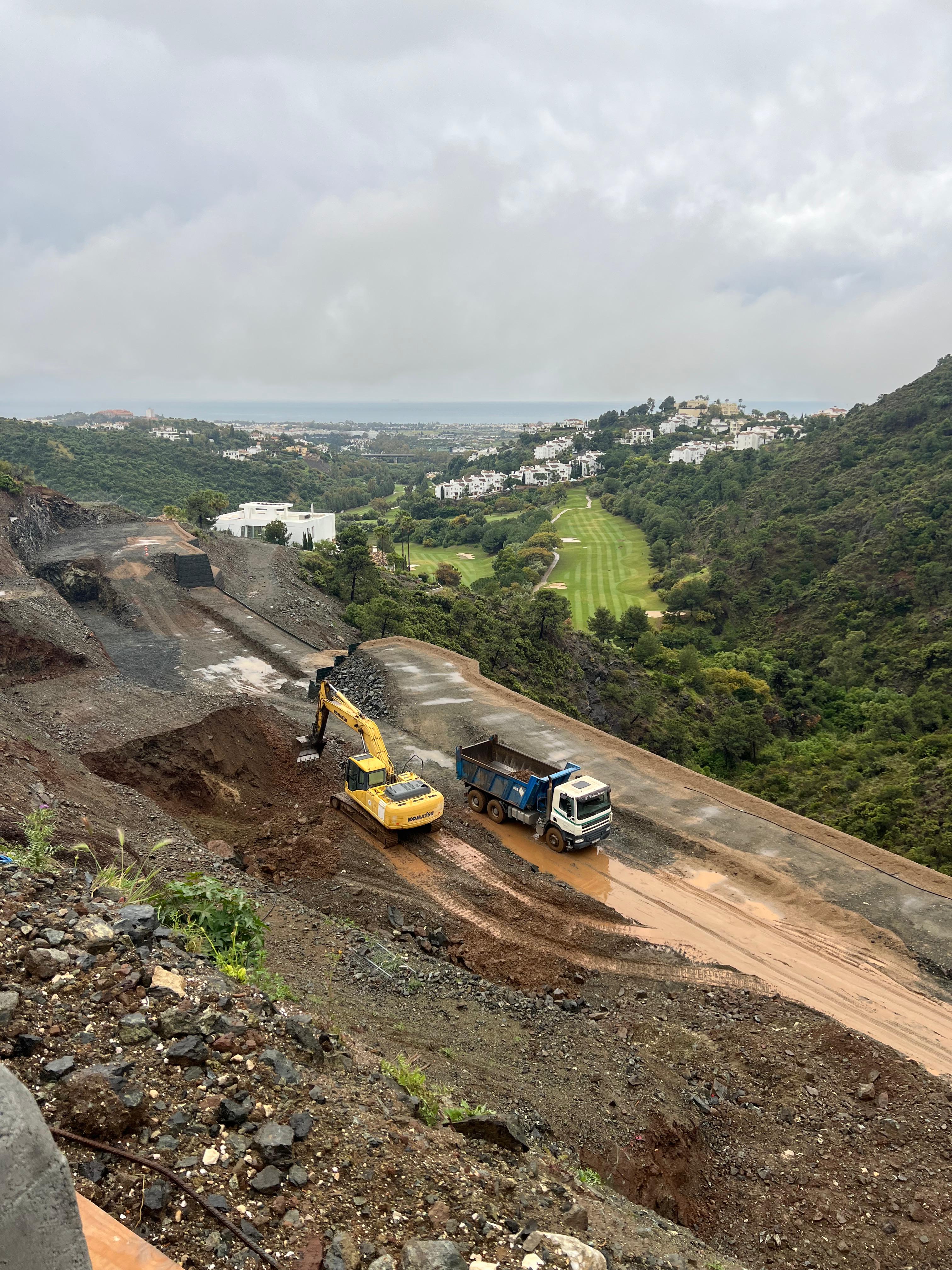
El Madroñal is characterised by complex topography: steep slopes, rocky substrate, dense Mediterranean vegetation and extraordinary views over the golf valley and the Mediterranean. This makes the earthworks phase far more demanding than on a flat plot. It is not simply a matter of excavating, but of reading the terrain and reshaping it in a controlled way so that the architecture can settle into it with logic, safety, and without disturbing the landscape.
The earthworks
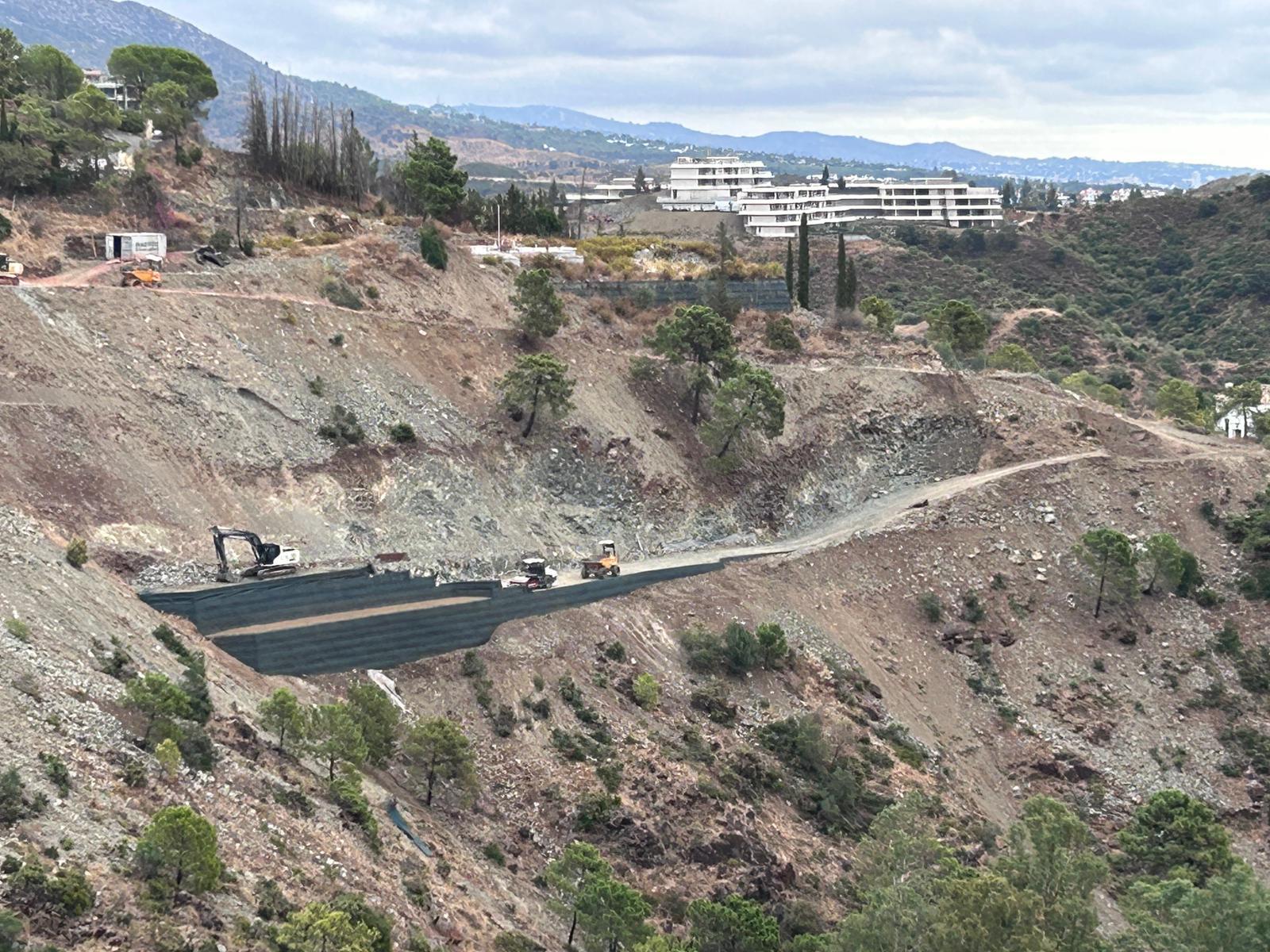
The first step was opening the temporary site road — the main artery for machinery, materials and personnel throughout the entire phase. From there, the hillside clearing began: removal of topsoil, rock excavation and the progressive formation of the stepped platforms on which the two villas will be built. Heavy machinery worked simultaneously on several fronts during the first months.
The foundations of the ecological retaining walls
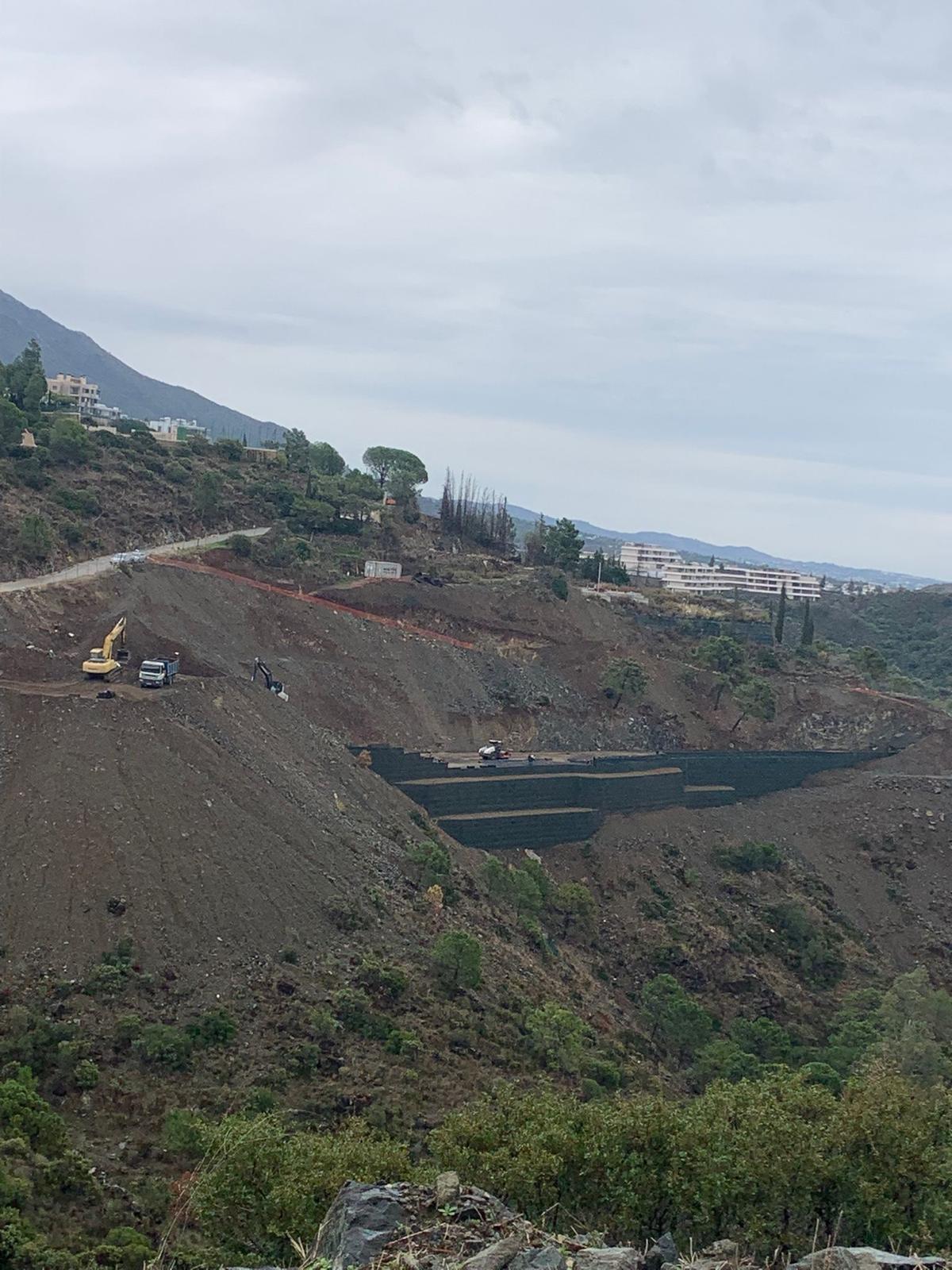
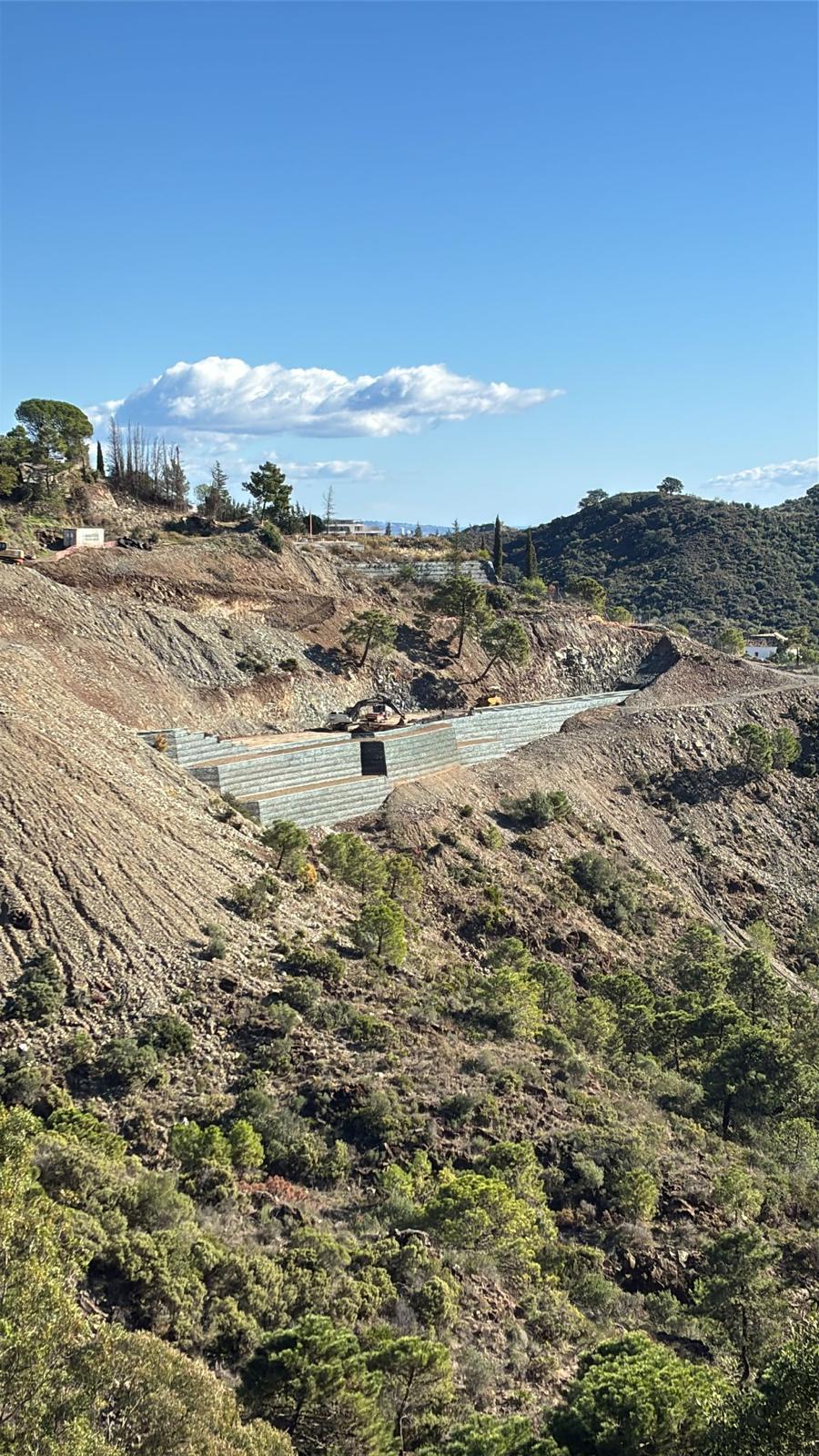
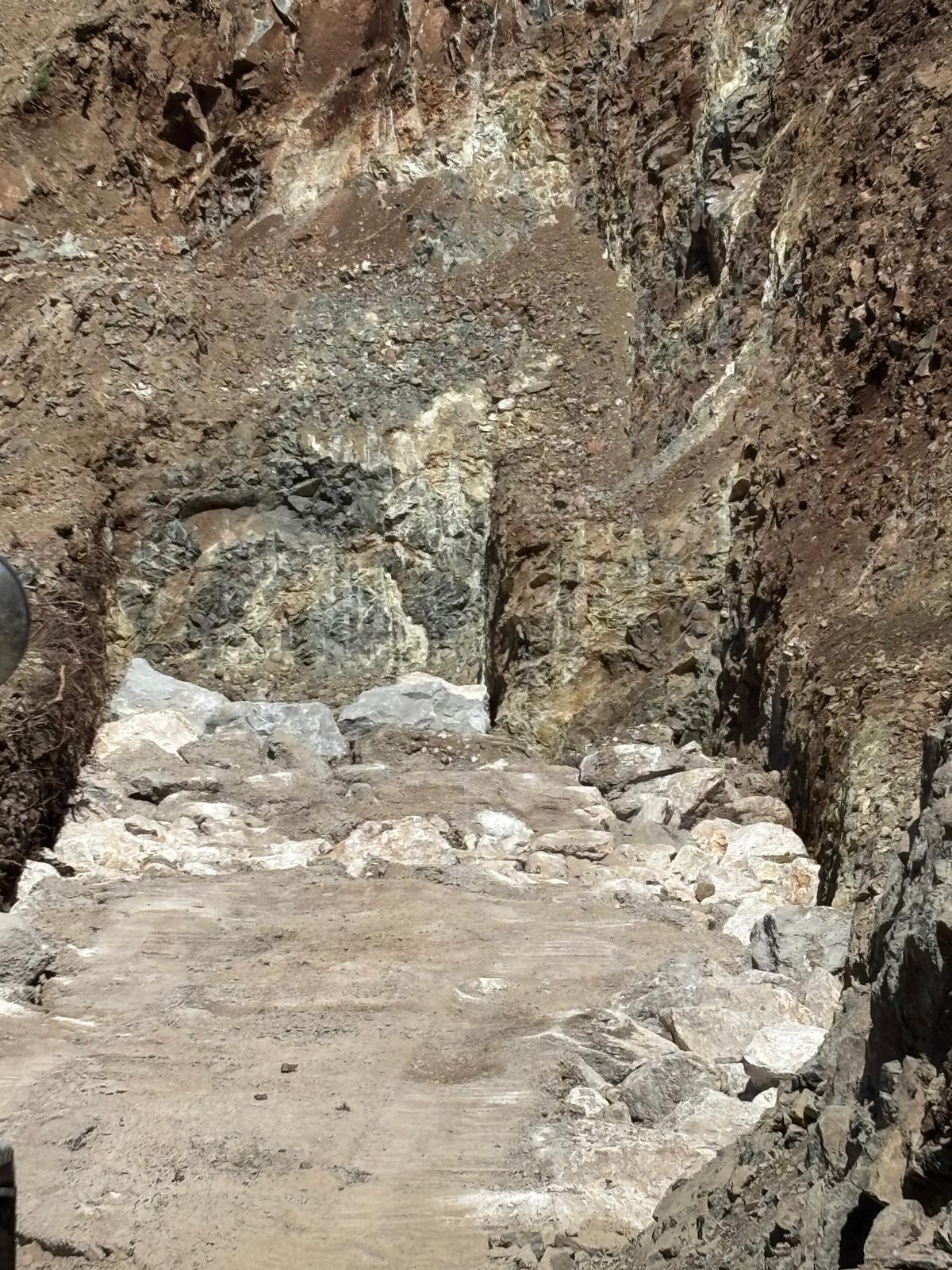
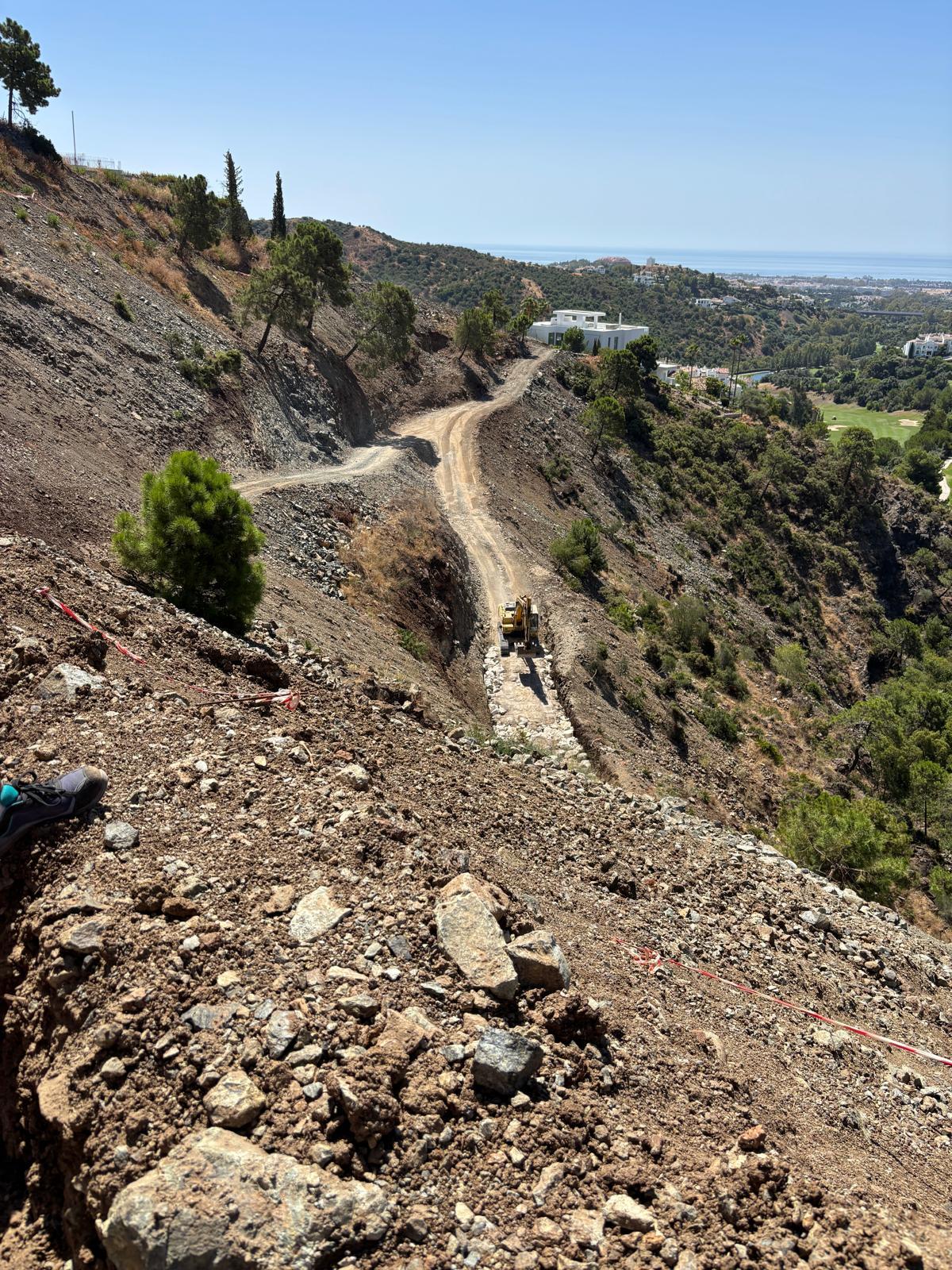
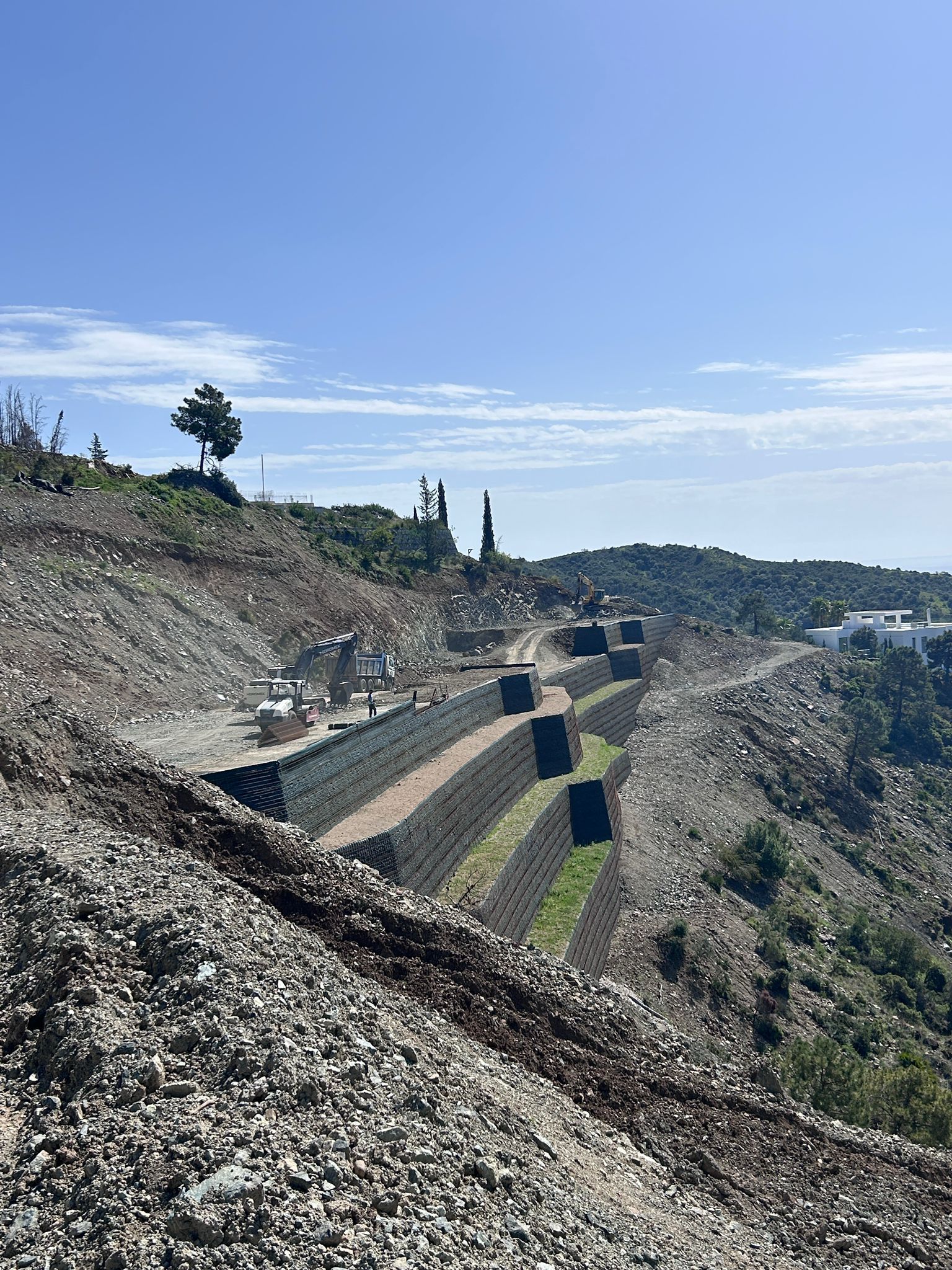
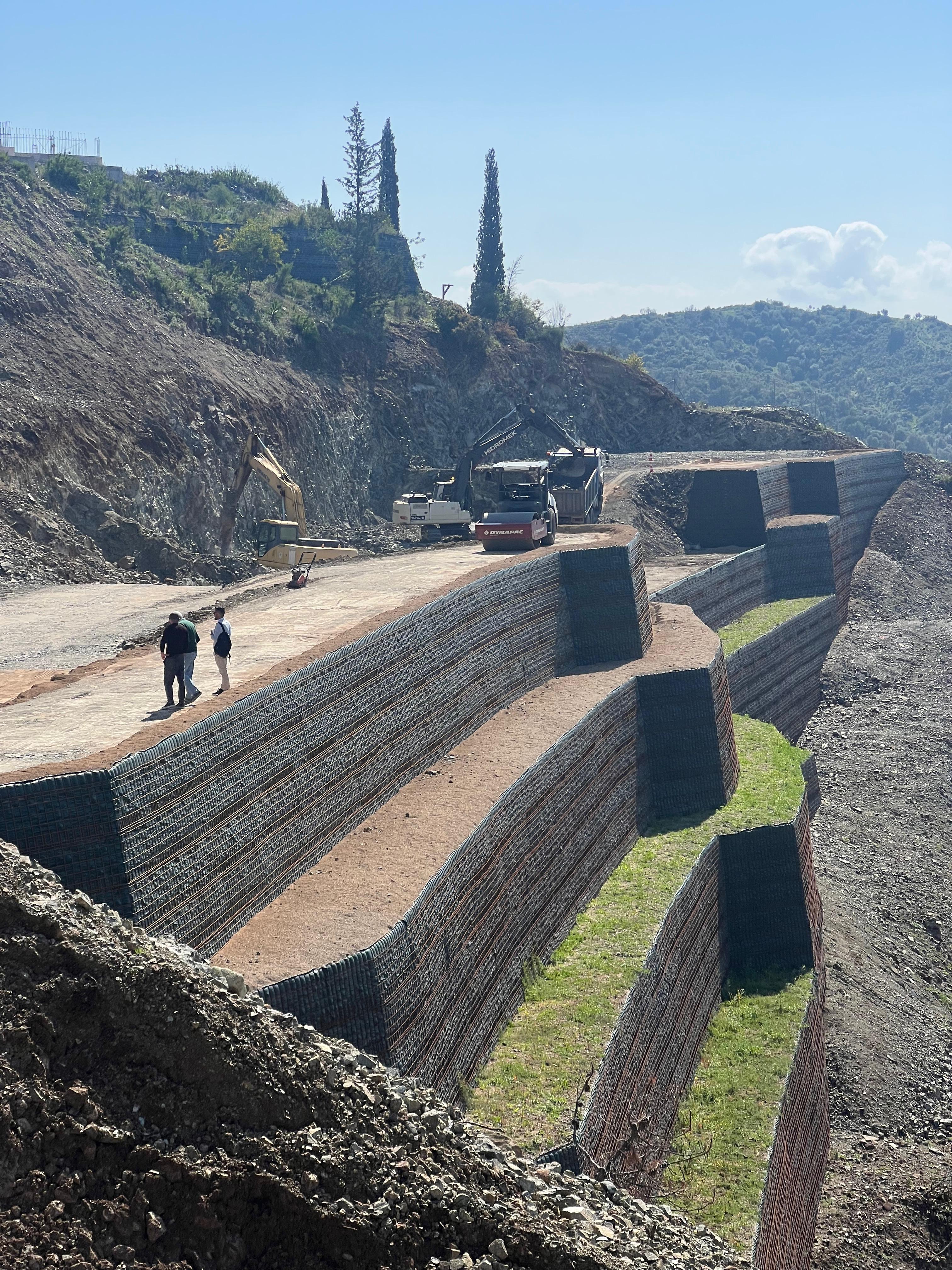
The chosen retaining system is ecological gabion walls: wire mesh structures filled with rock excavated from the site, arranged in stepped terraces with planted ledges between them. Before each wall could be erected, its foundation trenches had to be cut directly into the natural ground — in many places through solid rock — to guarantee the structure's anchorage against the pressure of the fill and the forces of the slope.
It is worth clarifying: the images of trenches and the excavator opening foundations shown below are not the foundations of the villas. They are the foundations of the ecological walls themselves, which in some places had to be embedded several metres into the rock. Work that is invisible in the finished result, but essential for the stability of everything that comes after.
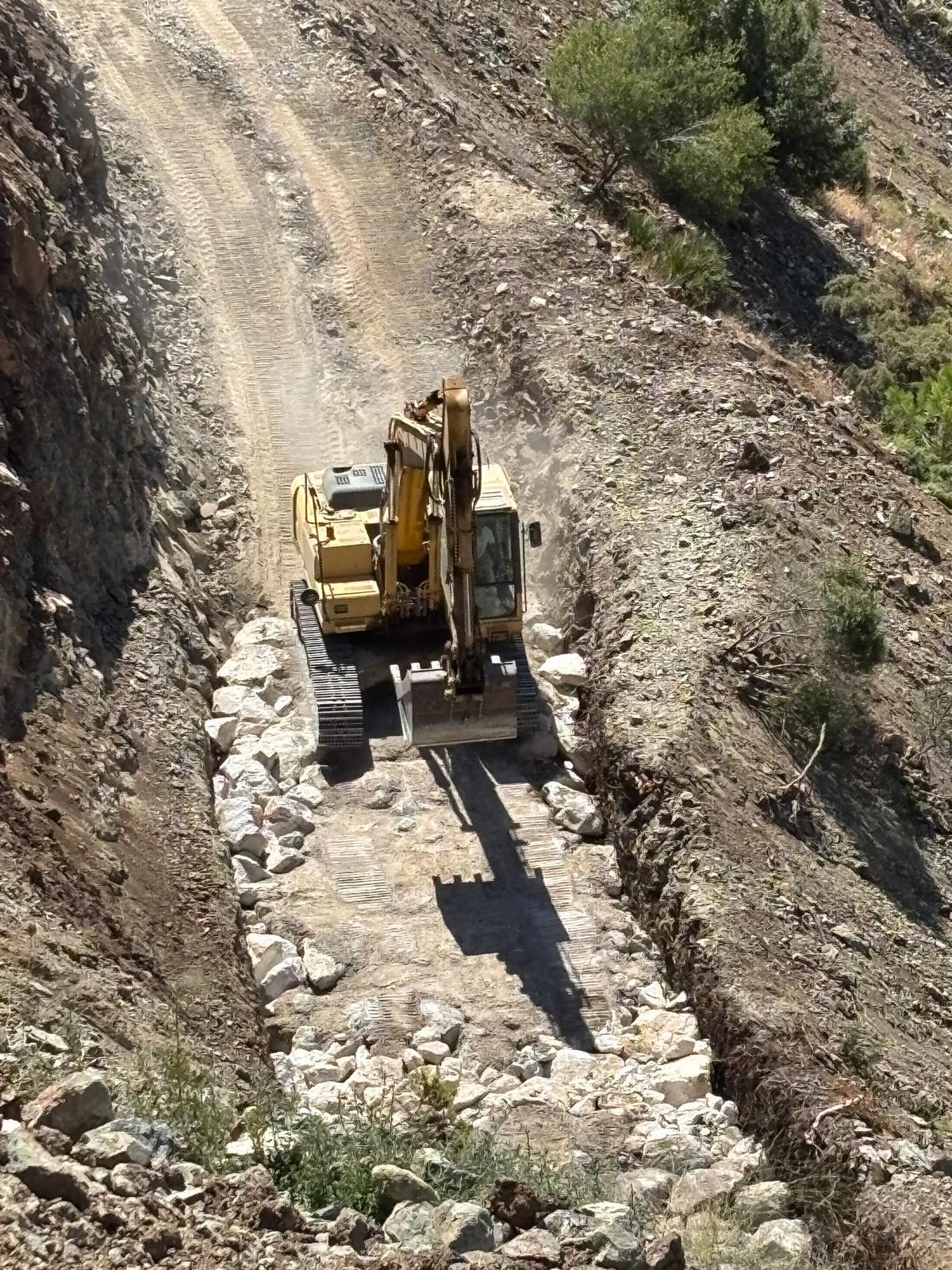
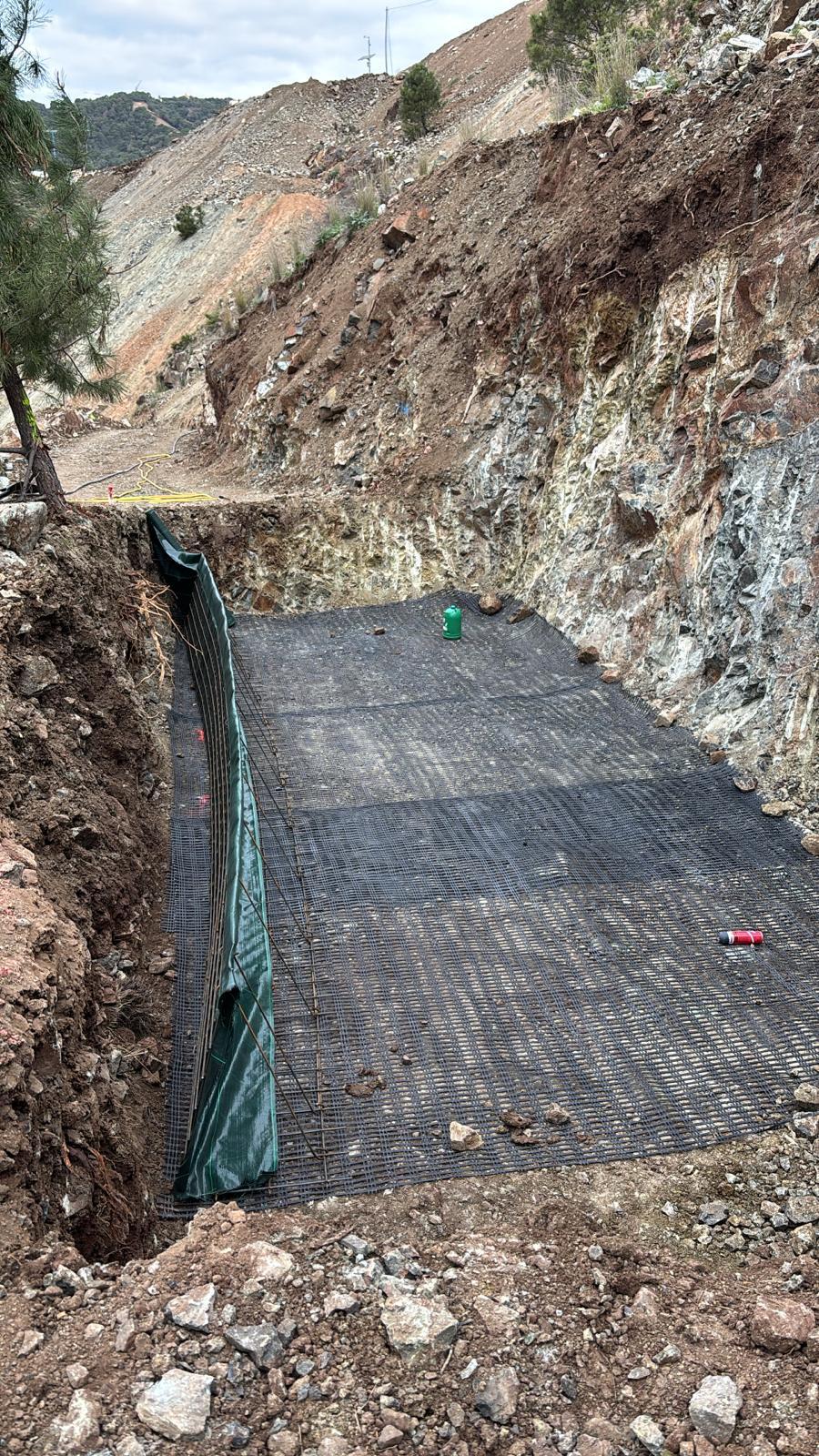
This phase is one of the least visible in the finished result, but one of the most decisive. A good building implantation depends greatly on how the ground is resolved.
The final stretch
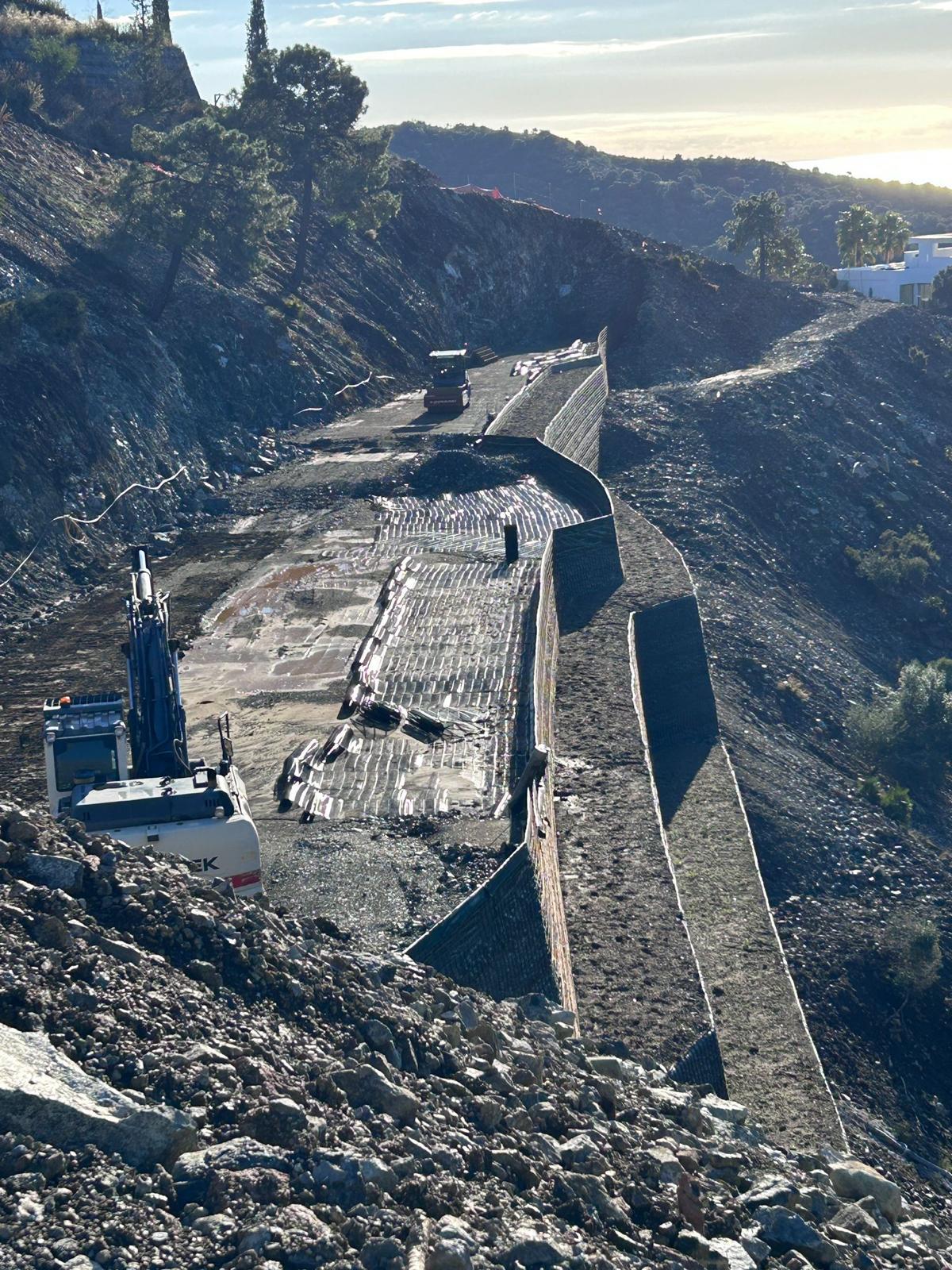
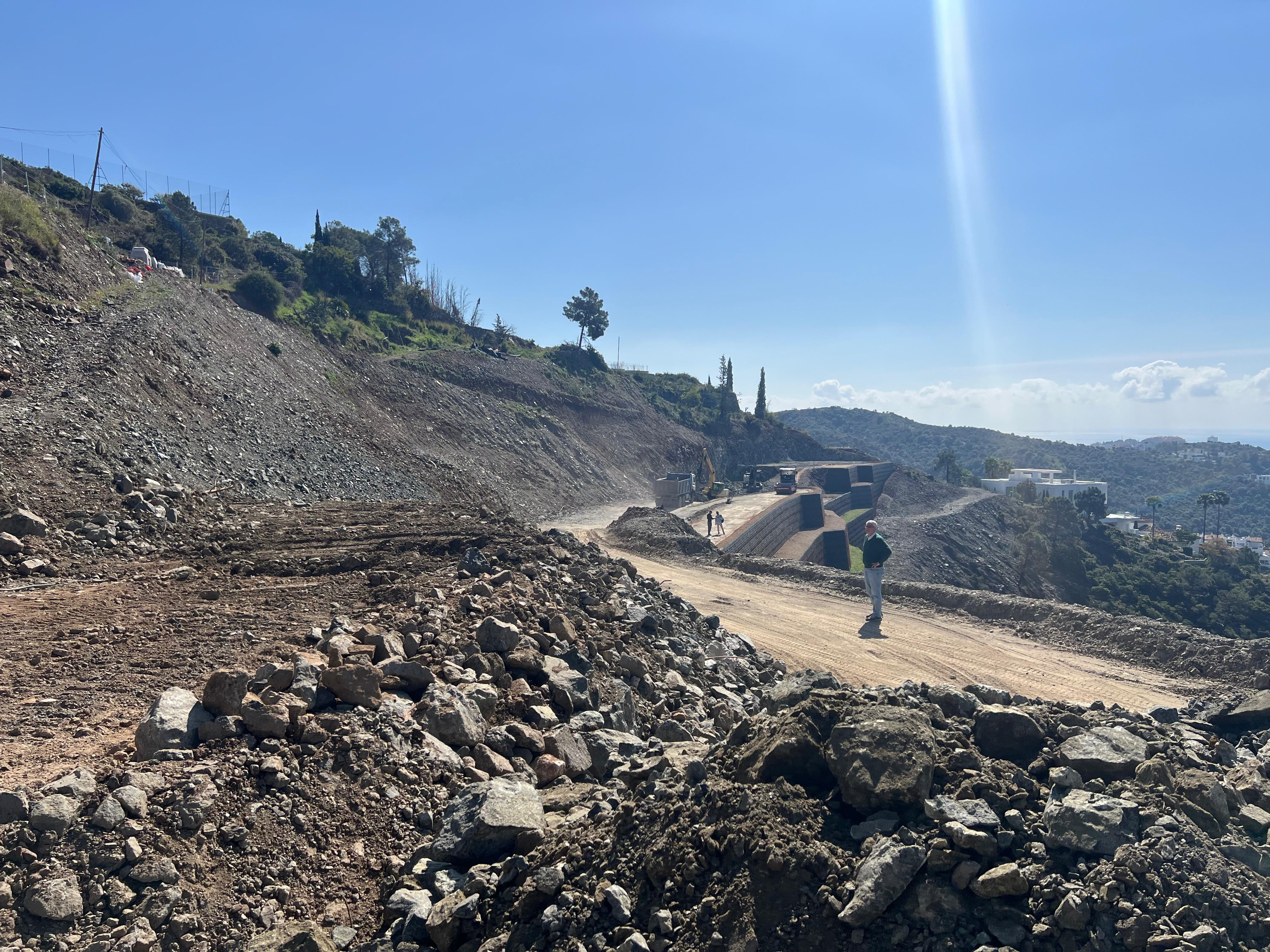
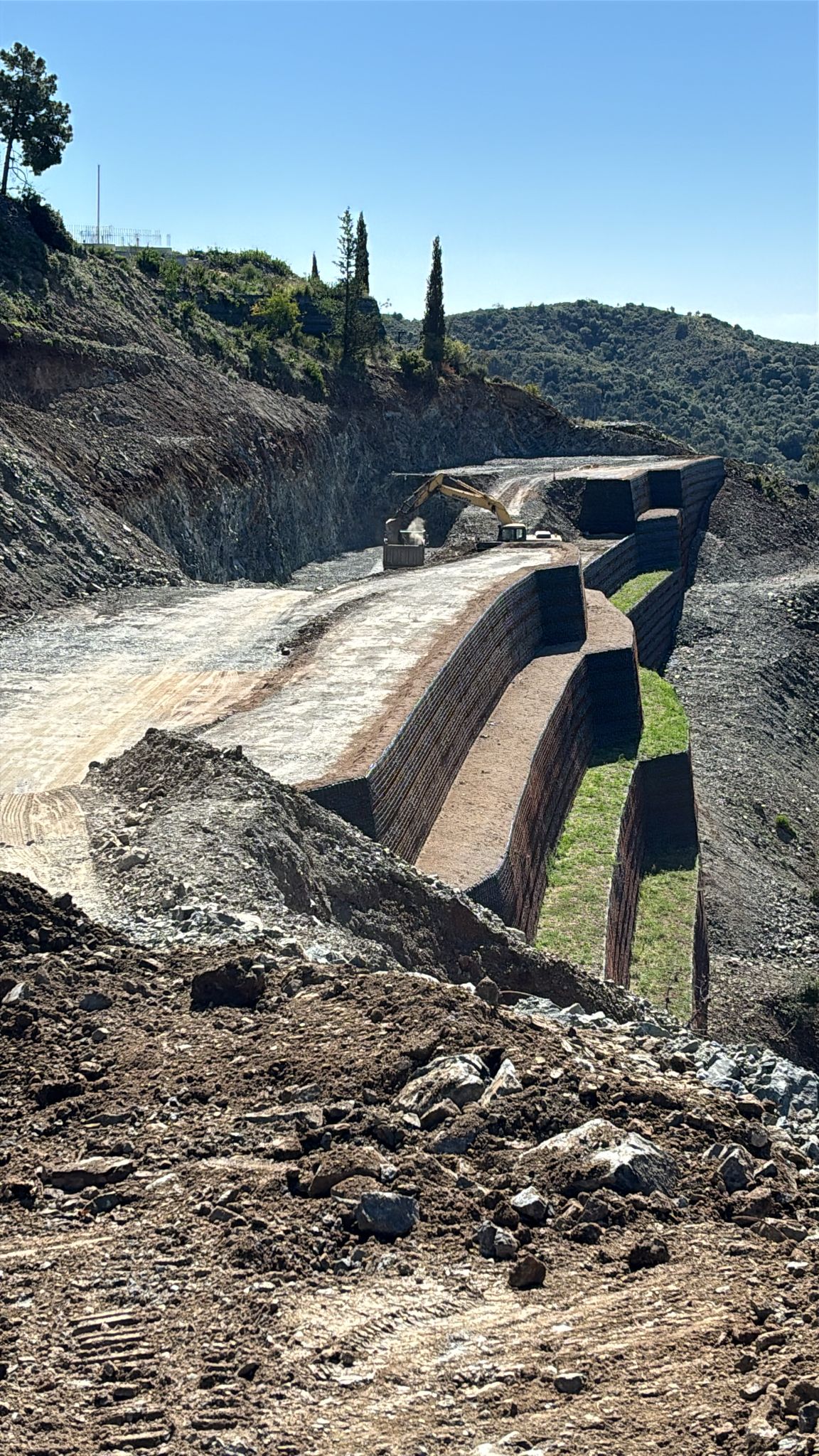
With the main walls built and the platforms compacted, the works enter their final straight: level adjustment, finishing of access roads and the last grading of the terrain. The hillside now shows its new geometry, but a few details remain to be closed before the phase is declared complete.
The result: the hillside reordered
With the walls complete and the platforms consolidated, the hillside looks entirely different from the original plot. The stepped terraces, with their grass ledges between wall and wall, order the slope with a geometry reminiscent of the cultivation terraces in the Málaga hinterland. The rock from the excavation, reused in situ as gabion fill, reduces the import of external material to a minimum and gives visual coherence to the whole.
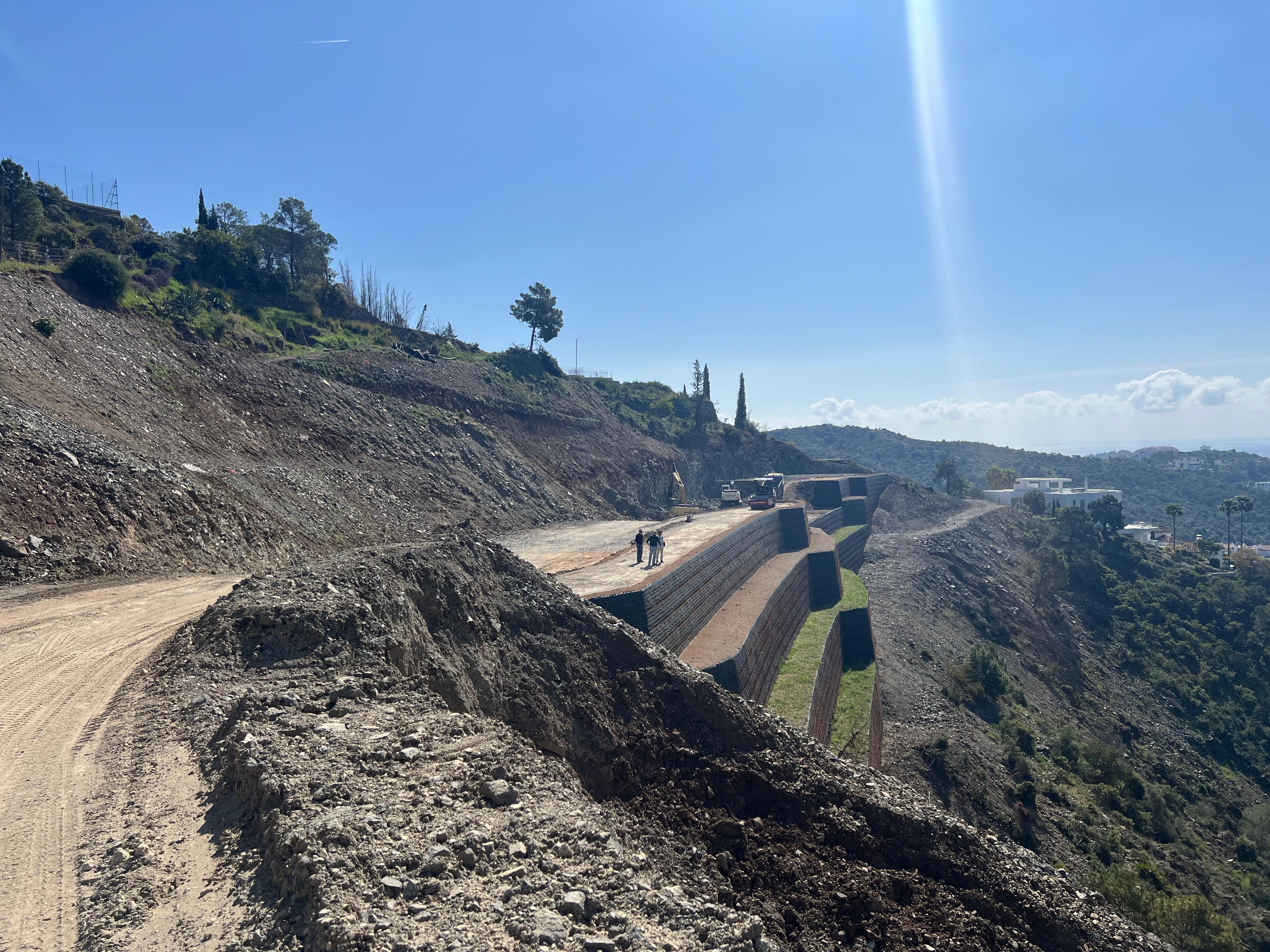
With the earthworks complete, the project moves into its next chapter: the villa foundations and the beginning of the structure. Everything that follows — walls, slabs, roofs, gardens — will rest on this ten months of quiet work that has reordered the mountain.
Related project
Villa Hope · El Madroñal, Benahavís →Thinking about building or renovating a home on the Costa del Sol? Discover our detached homes and villas service in Málaga.