The home spa: why more and more Marbella villas include an indoor pool
Twenty years ago, an indoor pool in a private home was an eccentricity. Today it is one of the most frequent requests in the luxury residential projects that come into our studio. Something has changed in the way international buyers conceive a home on the Costa del Sol.
We place the turning point around 2015, when the major five-star hotel operators began including wellness areas as a differentiating feature. The hotel spa experience — heated indoor pool, sauna, hammam, treatment area — started to transfer into the imagination of the private home. Clients who spent long periods in Marbella or Benahavís wanted to replicate at home what they enjoyed in the hotel.
What a home spa includes today
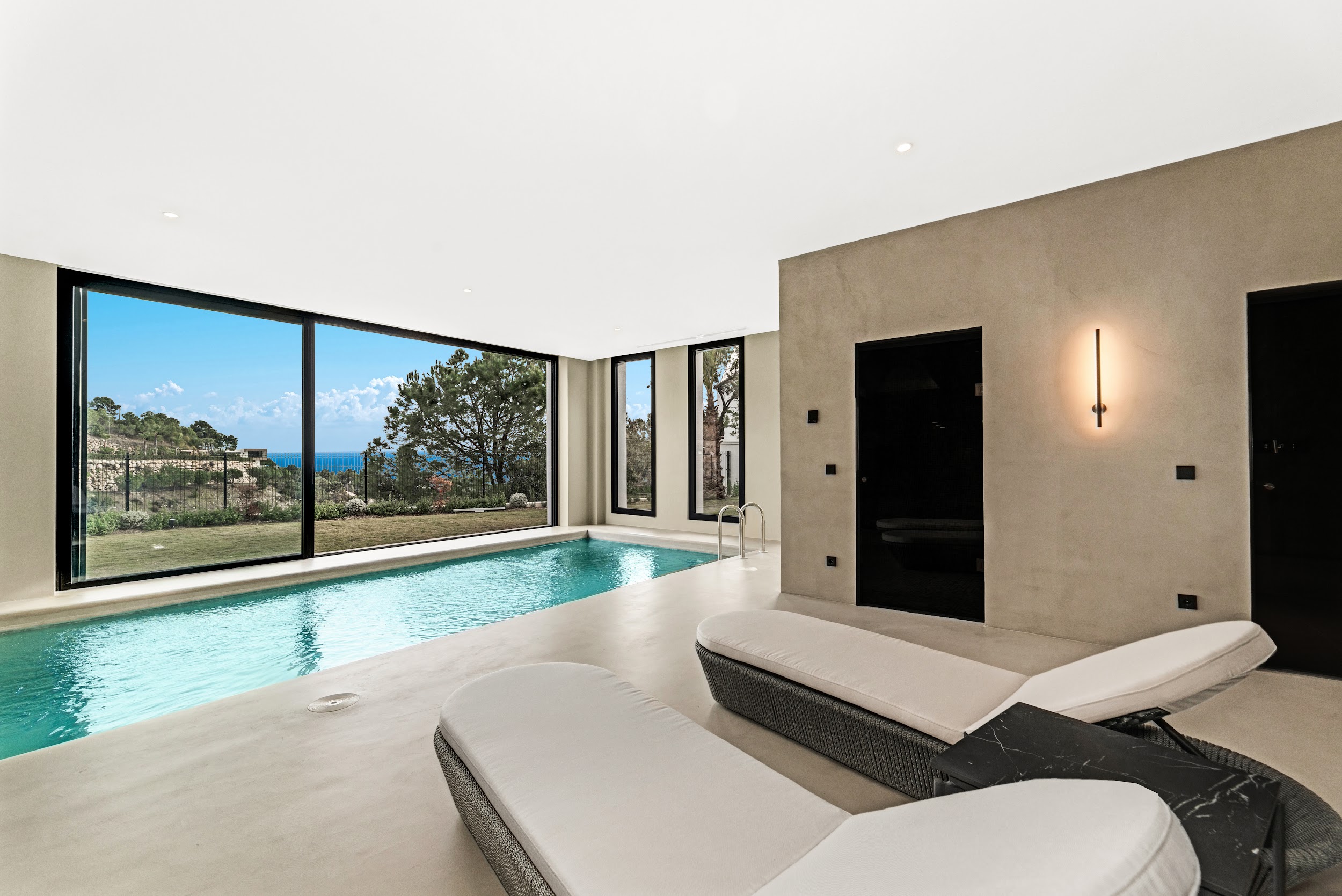
The most basic version is limited to an 8 to 12 metre indoor pool, usually visually connected to the garden through large glazed walls. From there, the programme can expand to include a Finnish sauna, steam room or hammam, a rest area with sun loungers, a contrast shower, a massage room, and in the most comprehensive projects, an adjacent gym with private changing rooms.
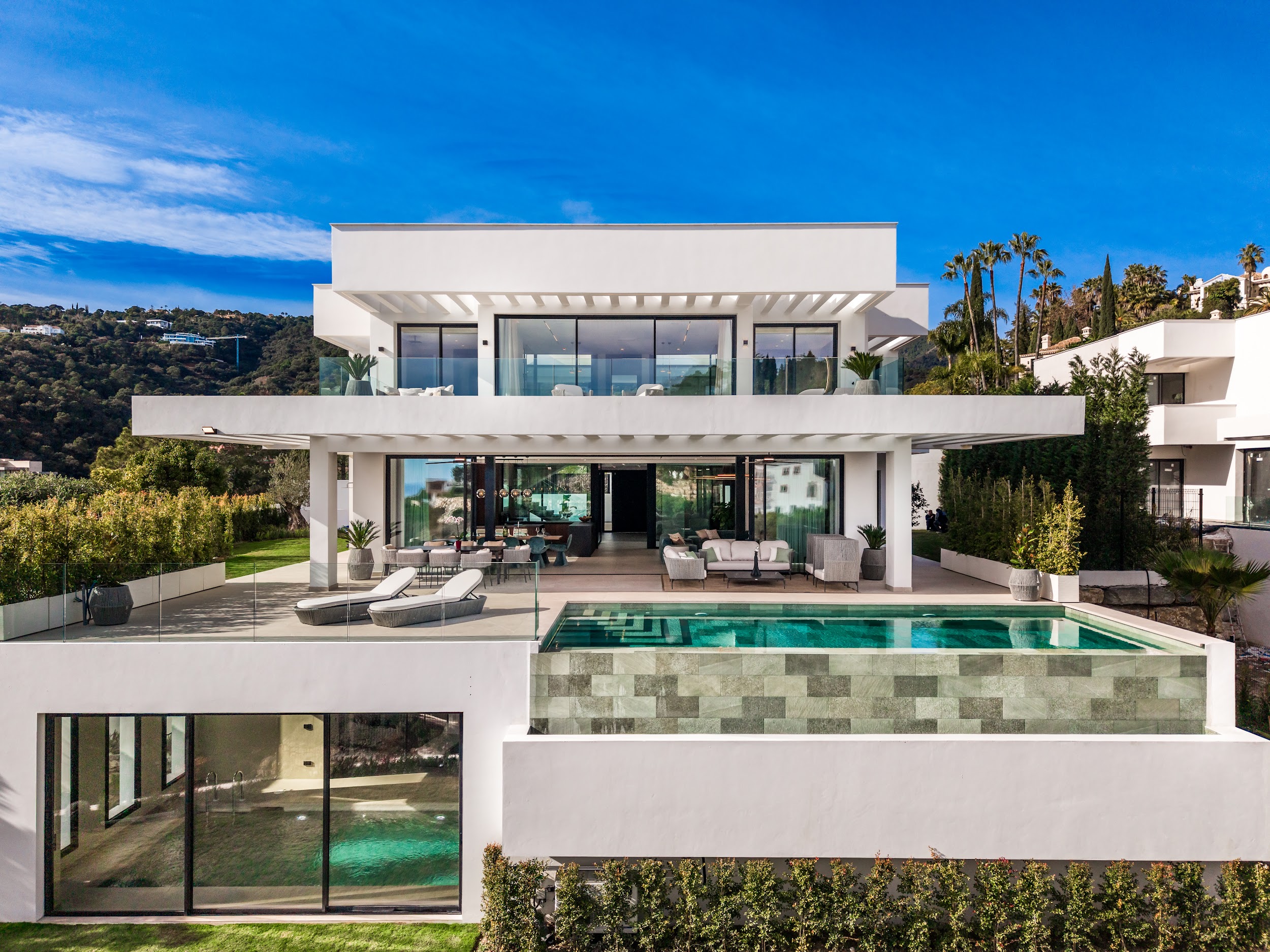
At Villa Madroñal Gold, one of the most complete projects we have developed in this regard, the spa occupies an entire below-ground floor. The 12-metre indoor pool maintains a year-round controlled temperature and opens via a folding door system onto the external terrace and the infinity pool. The hammam and sauna are in adjacent spaces clad in limestone and cedar wood.
The client no longer distinguishes between hotel wellness and home wellness. They want both in the same space.
The technical challenges nobody talks about
The home spa presents technical demands that cannot be improvised. The first and most critical is humidity control: an indoor pool generates constant condensation. If the ventilation and dehumidification system is not perfectly sized, the humidity attacks the enclosures, the joinery and, in the long term, the structure. In warm climates like Málaga's, where the outside already has high relative humidity in summer, this point is especially delicate.
Waterproofing is the second front. An indoor pool tank, when below ground or in contact with slabs and walls, requires a more demanding waterproofing system than a conventional outdoor pool. We always specify sprayed polyurea membranes in two layers, with special treatment at the junctions between surfaces. No other system offers the same long-term guarantee.
The third aspect is lighting. Without sufficient natural light, a covered pool can feel oppressive rather than relaxing. We always design the rooflights and glazing before any other element of the spa: the space's section is defined by how light enters, not the other way around.
Materials: between durability and sensory experience
Material selection in a spa is not just an aesthetic decision: it is first and foremost a technical one. Everything in contact with water or steam must be waterproof, easy to maintain and resistant to cleaning products. But it must also create an atmosphere.
The combinations that have worked best in our experience are: treated porous natural stone for the hammam floor and walls, teak or cedar timber for the dry sauna areas, and large-format technical porcelain imitating stone around the pool perimeter. Glass mosaic remains the preferred option for the inside of the pool tank when the client wants a water effect that changes colour with the light.
Integration with the rest of the project
The most frequent mistake we see in others' projects is treating the spa as an add-on, just another room with water. In our way of working, the wellness area forms part of the project strategy from the first sketch: it defines the organisation of the plan, the relationship with the garden and the position of the staircases.
In several of our projects, the spa is located in the basement level but connected to the garden via a level change in the terrain. So the space is not a basement: it has natural light, views onto the garden and cross-ventilation. This solution, which requires careful analysis of the site's topography from the very beginning, is the one that gives the best results in terms of spatial experience.
Demand for home spas shows no sign of abating. If anything, it is consolidating as a standard in the high-end segment of the Costa del Sol market, where the international buyer arrives with very precise references for what they want. Our task as architects is to translate those references into spaces that function well for decades.
Thinking about building or renovating a home on the Costa del Sol? Discover our detached homes and villas service in Málaga.