How to design a home on the Costa del Sol to enjoy all year round
On the Costa del Sol, many homes are imagined from summer outwards: pool, terraces, large windows, outdoor areas and life in the open air. It makes sense. The Mediterranean climate allows the outdoors to be enjoyed for much of the year, and the relationship between the house, the garden and the views is often one of the most important aspects of the project.
Even so, a good home should not work only in summer. It should also be comfortable in autumn, sheltered in winter and pleasant during the in-between months. Designing a house for the Costa del Sol means thinking about sun, shade, wind, humidity, orientation, materials and the way the home will actually be lived in throughout the year.
A well-designed home is not simply a spectacular house in August. It is a house that is enjoyed in January, in April, in July and in November.
Beyond the pool and the terrace
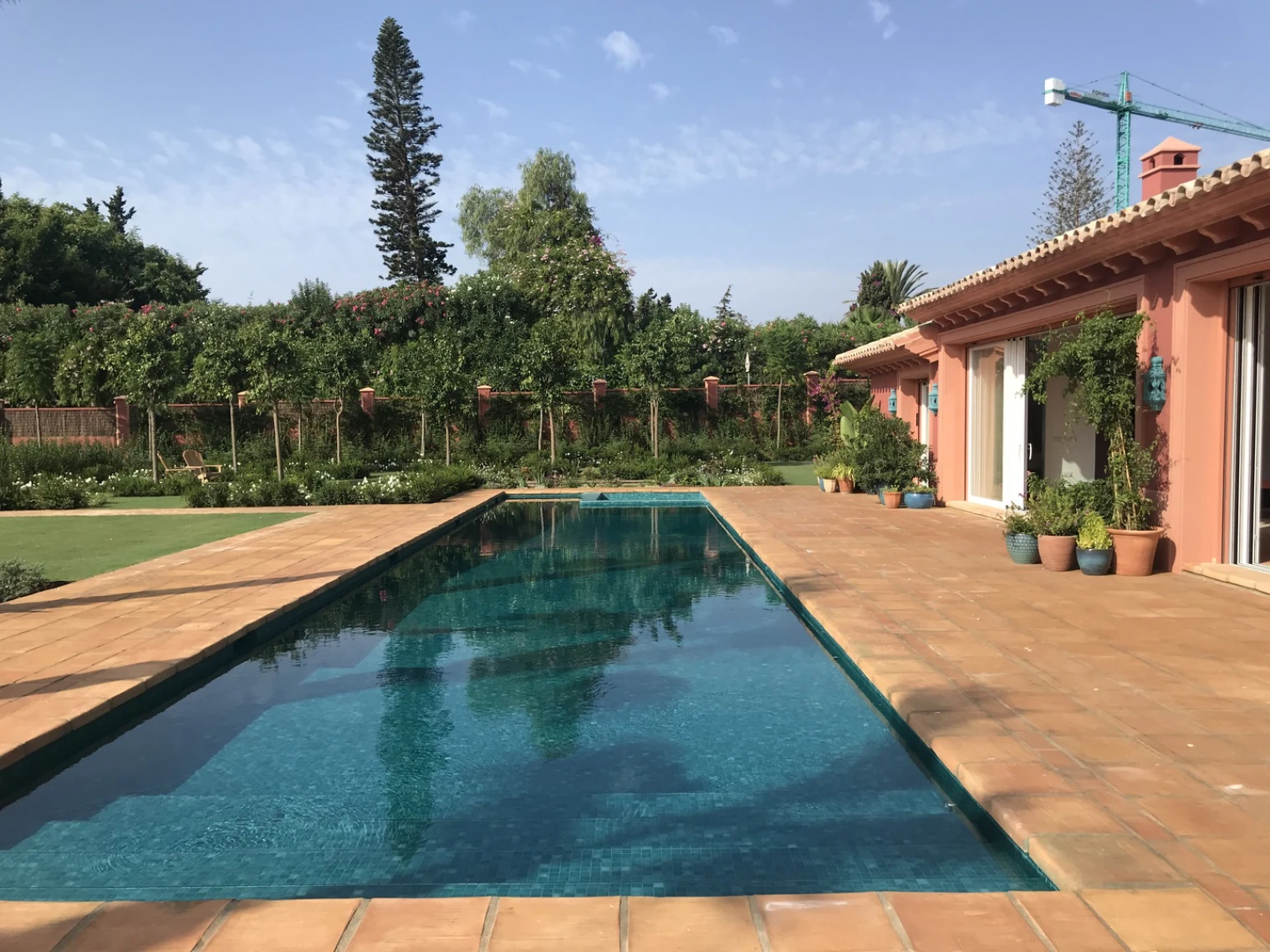
In a Mediterranean home, outdoor spaces are essential. Porches, courtyards, terraces, gardens and pools are part of the everyday life of the house. But problems appear when the whole project is organised solely around summer use.
A home designed only for summer can show obvious problems the rest of the year: unwelcoming interiors, large glazed surfaces with no solar control, terraces exposed to the wind, a lack of sheltered areas, excess heat in summer or a sense of cold in winter.
The goal, then, is not to choose between indoors and outdoors, but to create an intelligent transition between the two. The design should let the house open onto the garden when the weather allows, while also allowing it to close in and stay comfortable when temperatures drop or the wind picks up.
Orientation as the starting point
Orientation is one of the first important decisions in designing a detached home. Not every plot allows the same solutions, but studying the sun's path carefully from the outset can greatly improve the comfort of the house.
On the Costa del Sol, south and south-east orientations tend to offer good conditions: they capture winter light while allowing summer sun to be controlled through overhangs, porches, louvres, planting or pergolas. West-facing orientations, by contrast, can be trickier because of the low afternoon sun, especially in summer.
A well-orientated home can make the most of the winter sun to naturally warm the main living spaces while also protecting itself from excess radiation during the hottest months. It is not simply a matter of adding large windows, but of deciding where to open up, how much to open up, and how to protect those openings.
Shade in summer, sun in winter
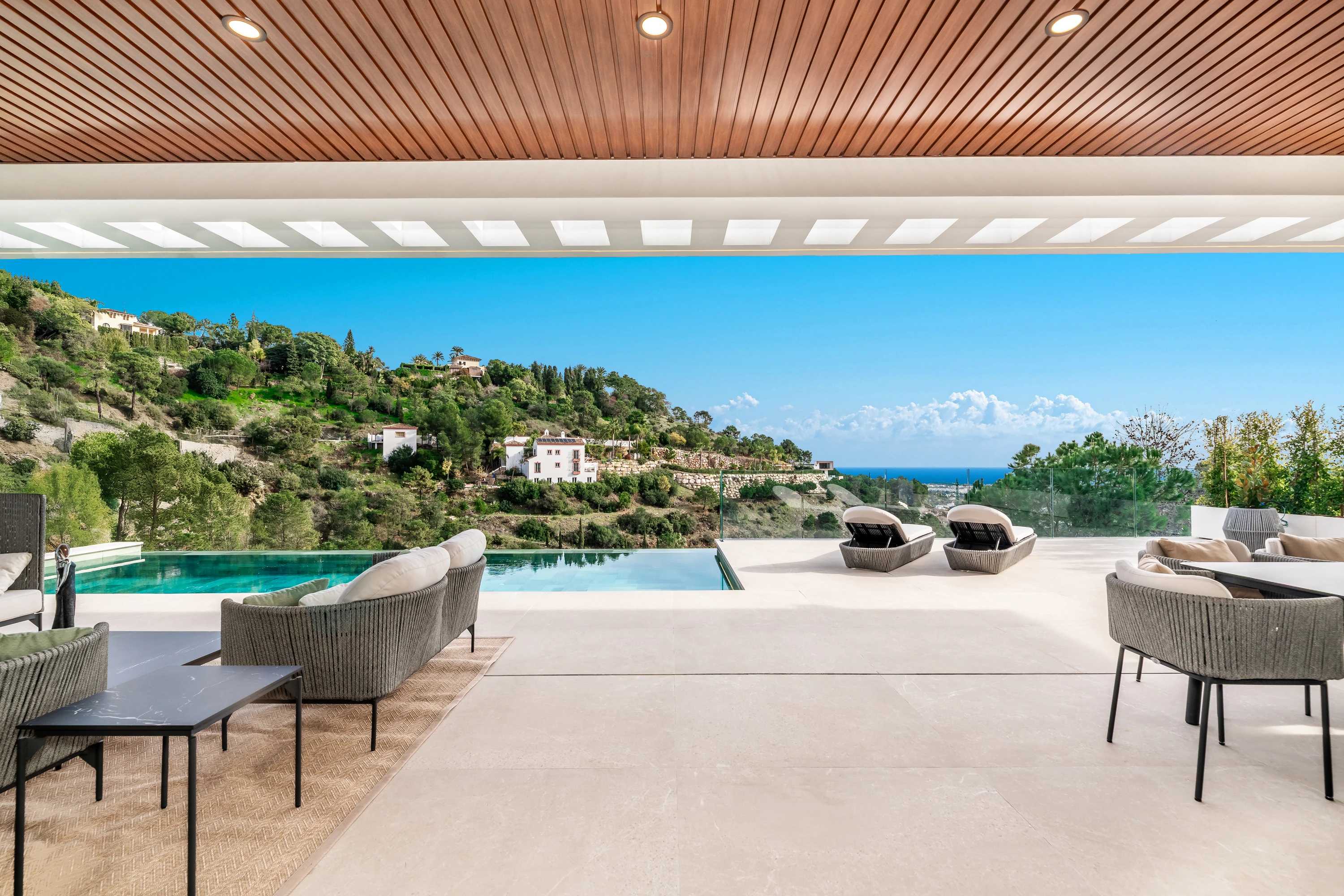
One of the great challenges of architecture in a Mediterranean climate is achieving shade without losing light. Porches, overhangs, pergolas, louvres, integrated awnings and planting can help create outdoor spaces that stay usable for more months of the year. Well designed, they shield the house from the high summer sun while letting in the lower winter sun.
This balance is key. A house that is too exposed can be uncomfortable in summer. But a house that is too closed off, or poorly orientated, can feel cold, dark or unwelcoming in winter. Architecture needs to work with the seasons, not against them.
Sheltered outdoor spaces
Not every terrace works the same way. An open terrace can be perfect in summer yet unusable in winter if it is too exposed to the wind or poorly connected to the house. That is why it is worth designing different types of outdoor space:
- Open areas by the pool
- Covered porches for dining or relaxing
- More sheltered courtyards
- Well-orientated terraces
- Sunny corners for winter
- Shaded spaces for summer
In many homes, such as Villa Madroñal Gold in Benahavís, the best spaces are not the largest, but the best positioned. A small sheltered courtyard, a terrace that catches the morning sun, or a well-orientated porch can significantly extend how much the house is actually used.
A good home on the Costa del Sol shouldn't be designed just for August — it should be designed to be enjoyed all year round.
Interiors worth spending time in
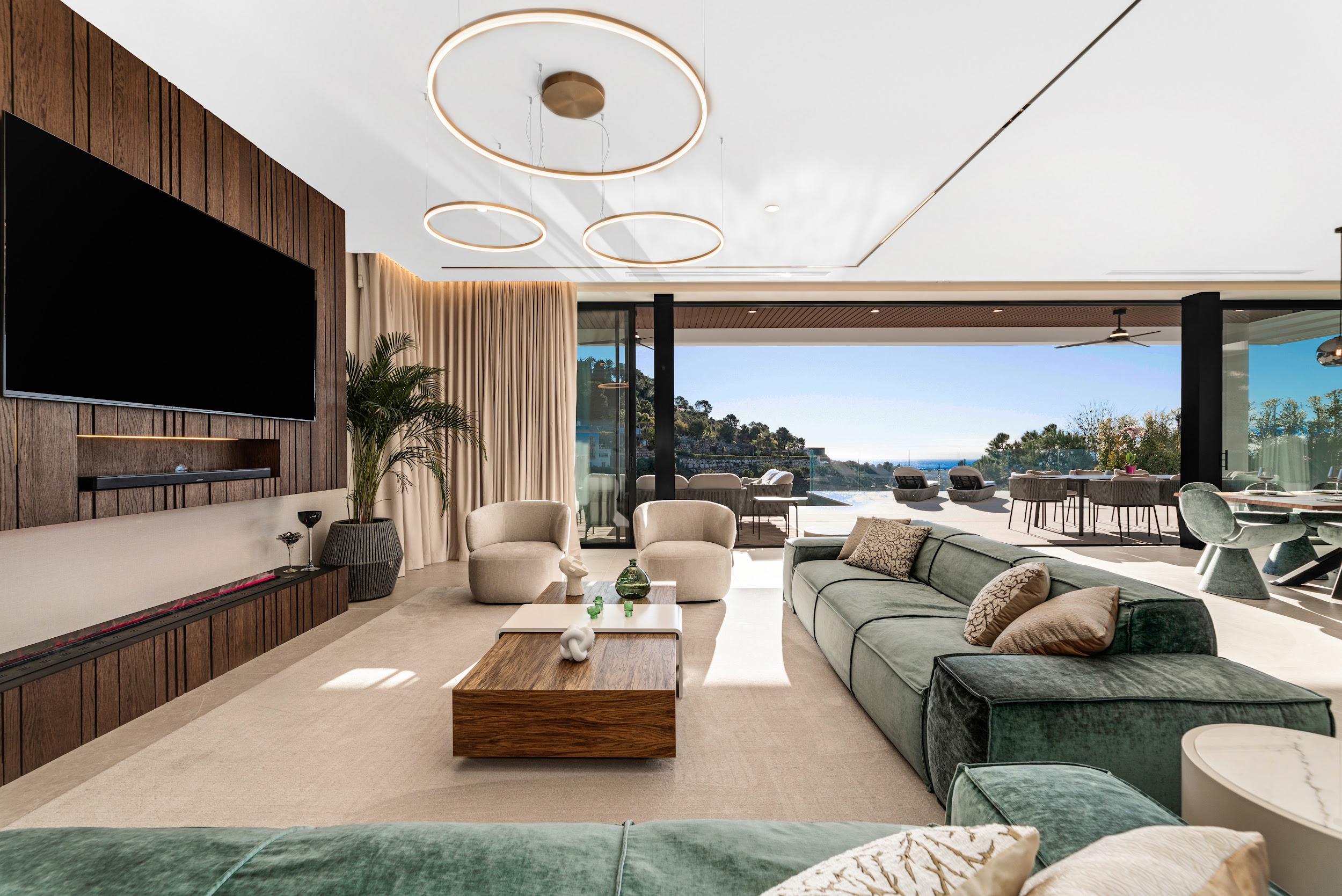
On the Costa del Sol it is common to give great prominence to the outdoors. But the interior should not be reduced to a mere passageway towards the pool. A home for every season needs comfortable living rooms, cosy sitting areas, good natural light, a visual relationship with the garden, and spaces able to adapt to different times of day and different seasons.
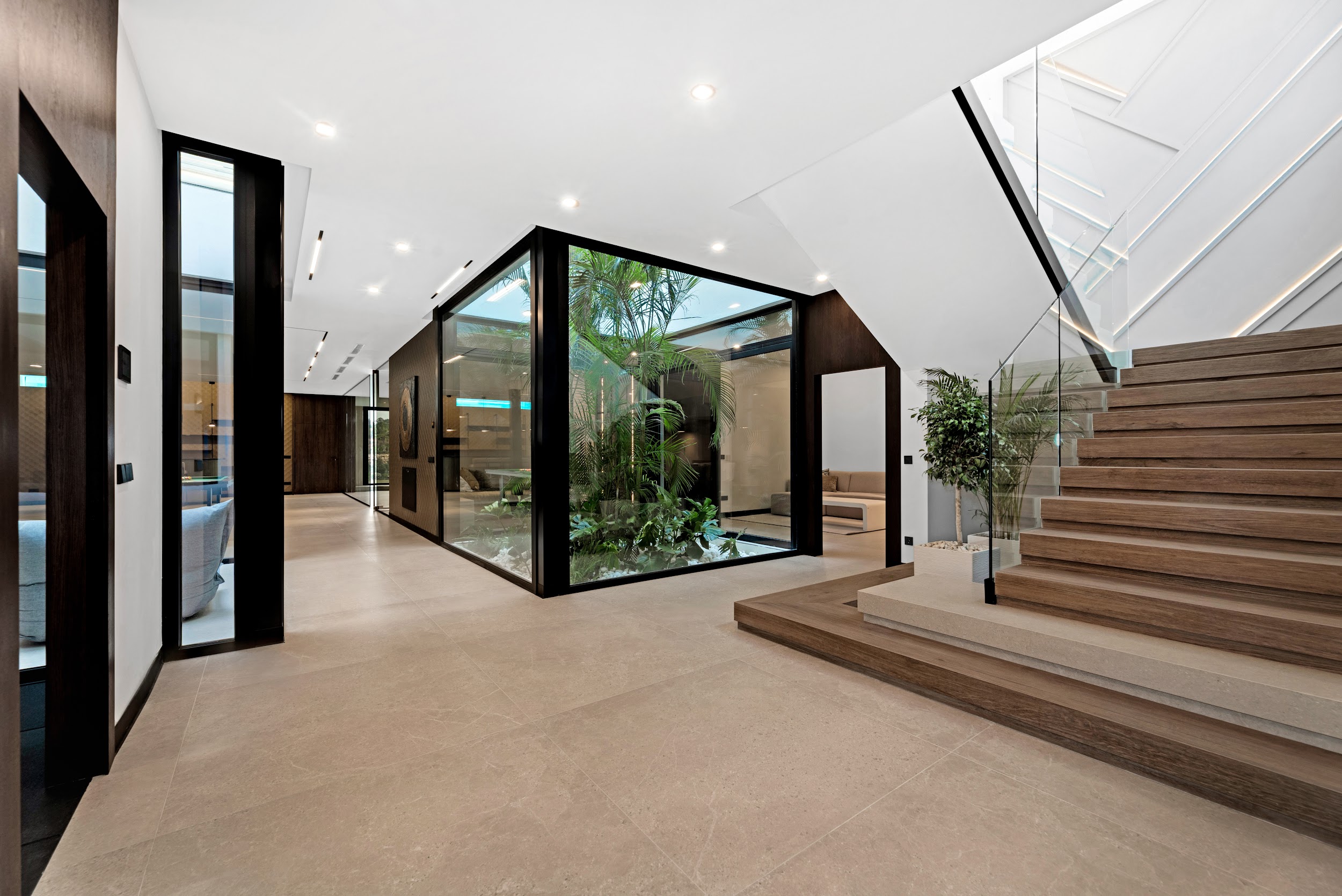
In winter, a house should allow for a more indoor way of living without losing its connection to the landscape. Natural light, warm materials, well-proportioned spaces and protection from wind or damp matter just as much as the exterior image. A good Mediterranean home is not simply an open house: it is a house that knows when to open up and when to protect itself.
Insulation, glazing and efficiency
Although the climate in Málaga and the Costa del Sol is mild, insulation remains essential. A poorly insulated home can overheat in summer, lose warmth in winter, and end up relying too heavily on air conditioning and heating systems.
The choice of window frames, glazing, solar protection, thermal insulation, ventilation and climate-control systems should be studied as part of the design itself, not decided afterwards. Comfort does not depend solely on installing more powerful machinery. It depends on the architecture reducing energy demand from the outset. A well-designed house needs less effort to stay comfortable.
Natural ventilation and heat control
Cross-ventilation is a valuable tool in Mediterranean homes. Opening correctly on opposite or complementary façades allows air to be renewed, accumulated heat to be released, and the sensation of heat to be reduced at certain times of year.
But ventilating well does not mean opening up without control. Privacy, orientation, prevailing winds, security, noise and the relationship with courtyards or gardens all need to be taken into account. When natural ventilation is combined with shade, thermal mass, planting and good orientation, the home gains a great deal in passive comfort.
Materials designed for the climate
In areas close to the sea, or exposed to humidity, wind and solar radiation, the choice of materials is decisive. Outdoor flooring, window frames, railings, cladding, timber, ironwork and paint should all be chosen with ageing and maintenance in mind.
A material can look very attractive on day one and perform poorly if it is not suited to the environment where it is used. Residential architecture on the Costa del Sol should aim for beauty, but also for durability — especially in homes with a pool, terraces, gardens and direct sun exposure.
A home for different rhythms of life
Not every home is used in the same way. Some are a main residence. Others are used mainly in summer. Others combine family use, guests, remote work or long stays. That is why, before designing, it is important to understand how the house will actually be lived in:
- Will it be a main residence or a second home?
- Will it be used in winter?
- Will there be guests frequently?
- Will people work from home?
- Will everyday life happen mainly on the ground floor?
- Are views, privacy, garden or ease of maintenance the priority?
These questions directly shape the layout, the size of the spaces, the relationship between bedrooms and shared areas, the position of porches, the orientation of the pool, and the overall organisation of the home.
Designing for every season is designing better
A home on the Costa del Sol should make the most of the climate's advantages while also responding to its demands. The aim is not to build a house only for the summer months, but a home able to adapt to the seasons, the site and the way its owners actually live.
When a project is worked through from orientation, shade, ventilation, insulation, materials and real day-to-day use, the result is a house that is more comfortable, more efficient and more durable.
At Santos Arquitectos we develop detached homes and villas in Málaga and the Costa del Sol from an integrated point of view, as part of our architecture services: preliminary study, planning feasibility, architectural design, technical design and site supervision. Every home is designed to measure, responding to the site, the client, and the way the house will be lived in throughout the year.
Thinking about building a home in Málaga or the Costa del Sol? We can help you study the possibilities of your plot and define a home adapted to the climate, the setting and your needs. Get in touch with Santos Arquitectos for an initial steer on your project.
Thinking about building or renovating a home on the Costa del Sol? Discover our detached homes and villas service in Málaga.