Cruz de Humilladero · Málaga
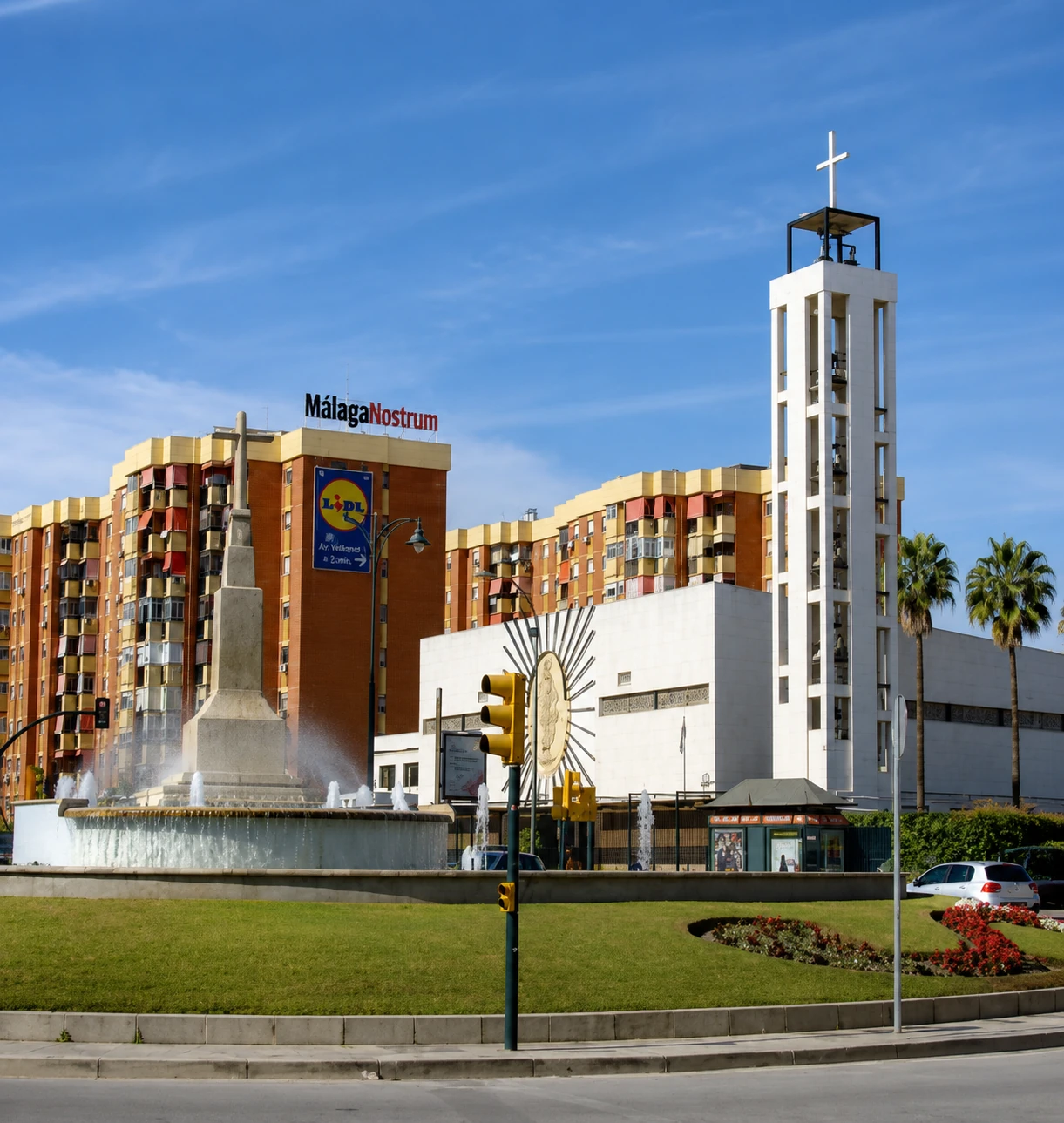
In the early 1960s, Málaga's rapid growth generated new districts without religious facilities. The diocese commissioned José María Santos Rein to design the parish church of the Assumption of Our Lady for the Cruz de Humilladero neighbourhood, on a roundabout where the districts of San Rafael and Carranque converge.
The three-thousand-square-metre plot imposes its own logic: the site is framed by the road junction and the building must efficiently fulfil its urban role, be recognisable as a landmark from the various approaches to the roundabout, and at the same time house the liturgical programme with dignity. The project addresses these three conditions simultaneously.
The plan adopts a trapezoidal form: the single nave progressively narrows towards the altar, accentuating the interior perspective and concentrating attention on the chancel. This solution makes it possible to achieve a clear span of more than twenty metres without intermediate supports — a considerable structural challenge for the era — and produces an open, solemn space that is easily adaptable to liturgical use.
The interior lighting is resolved through bands of stained glass set at different heights along the lateral perimeter. Light enters filtered and chromatically modulated, avoiding direct glare and creating the contemplative atmosphere characteristic of places of worship. The altar also receives special lighting through a zenith skylight and lateral openings in the volume housing the chancel.
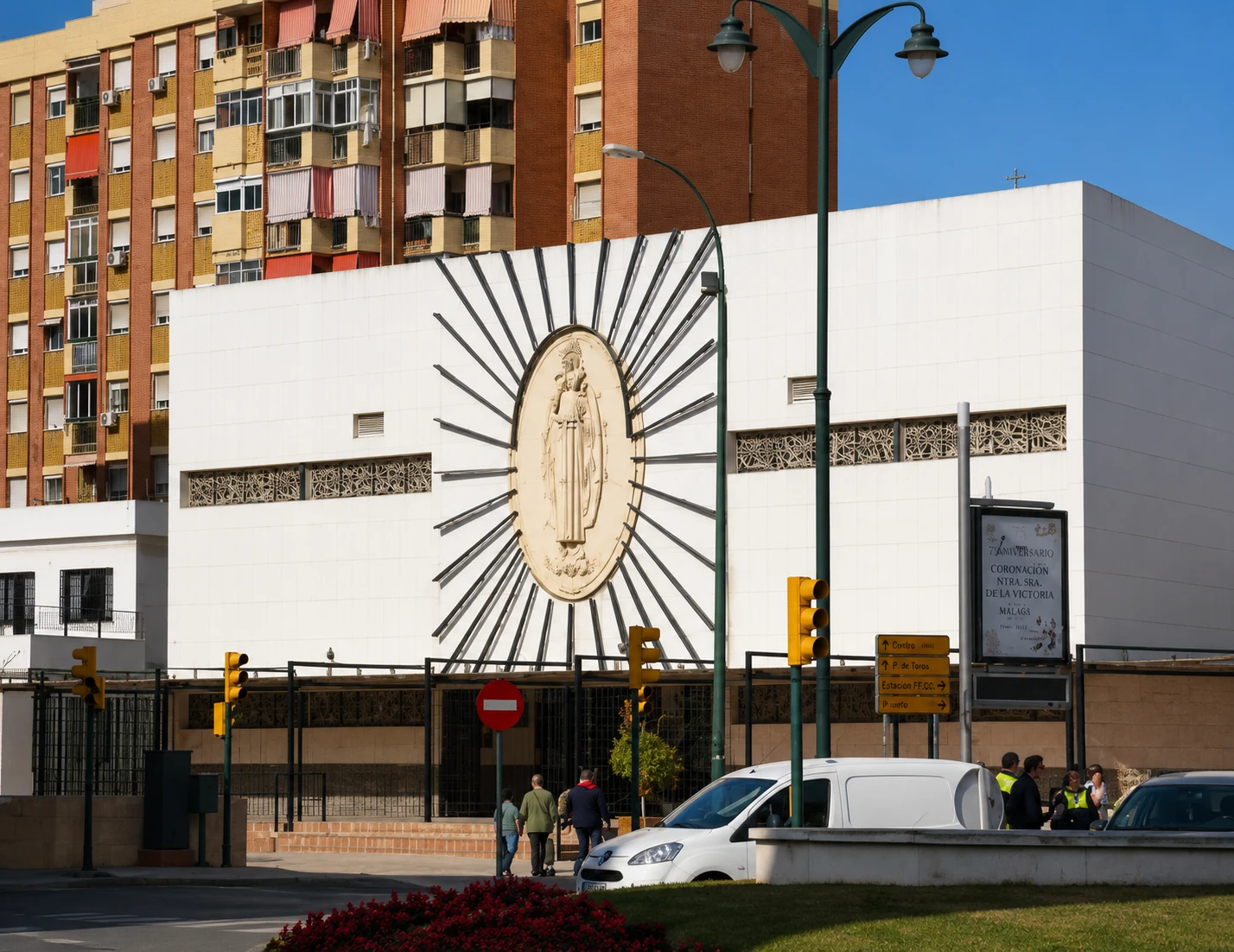
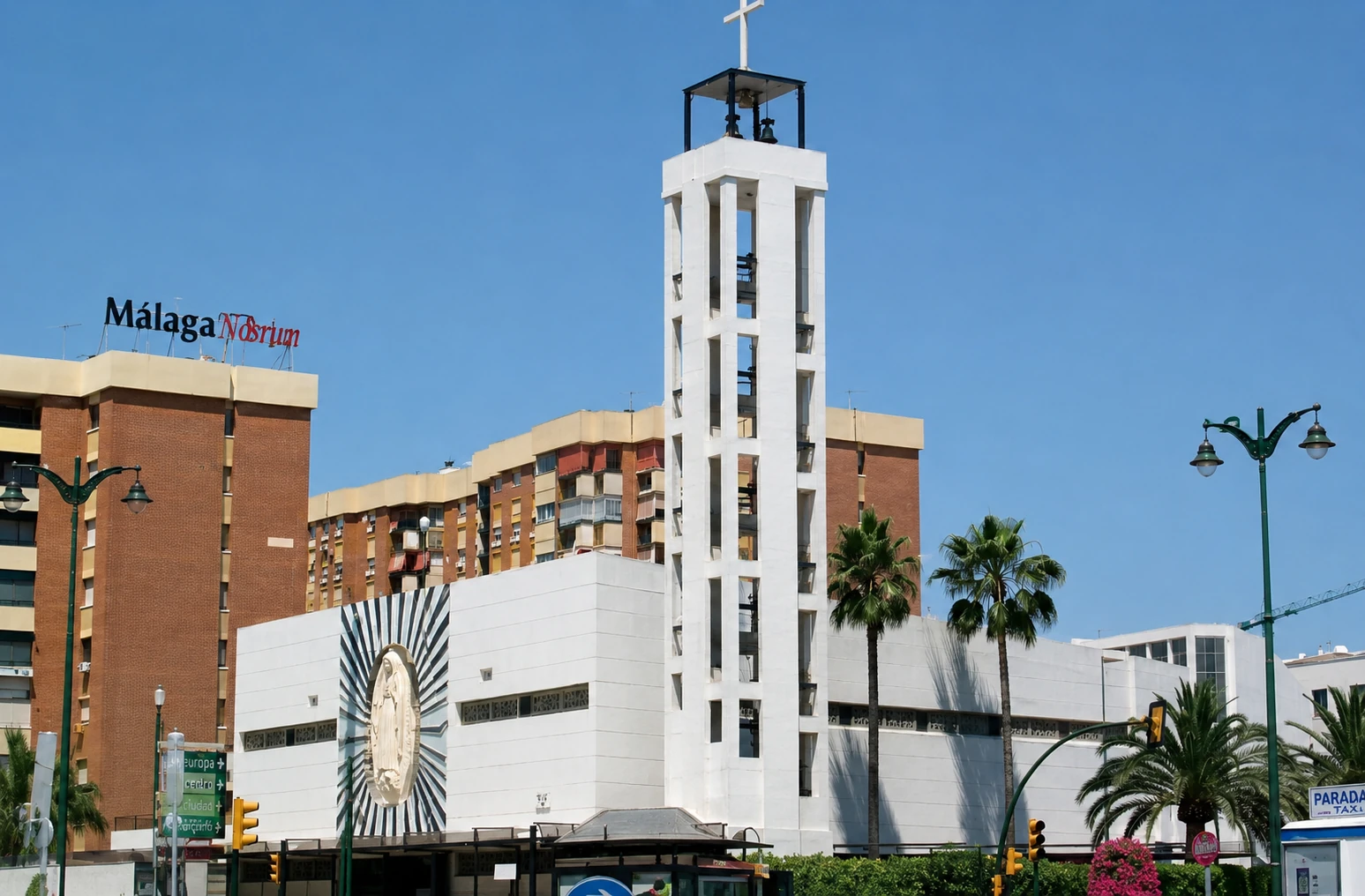
The exterior envelope is resolved with a very compact white tyrolean render that underlines the solidity of the ensemble and differentiates it from the surrounding domestic architecture. On the main facade, the large sculptural medallion of the Virgin of the Assumption surrounded by metal rays acts as the identifying image of the building and reinforces its legibility from the roundabout.
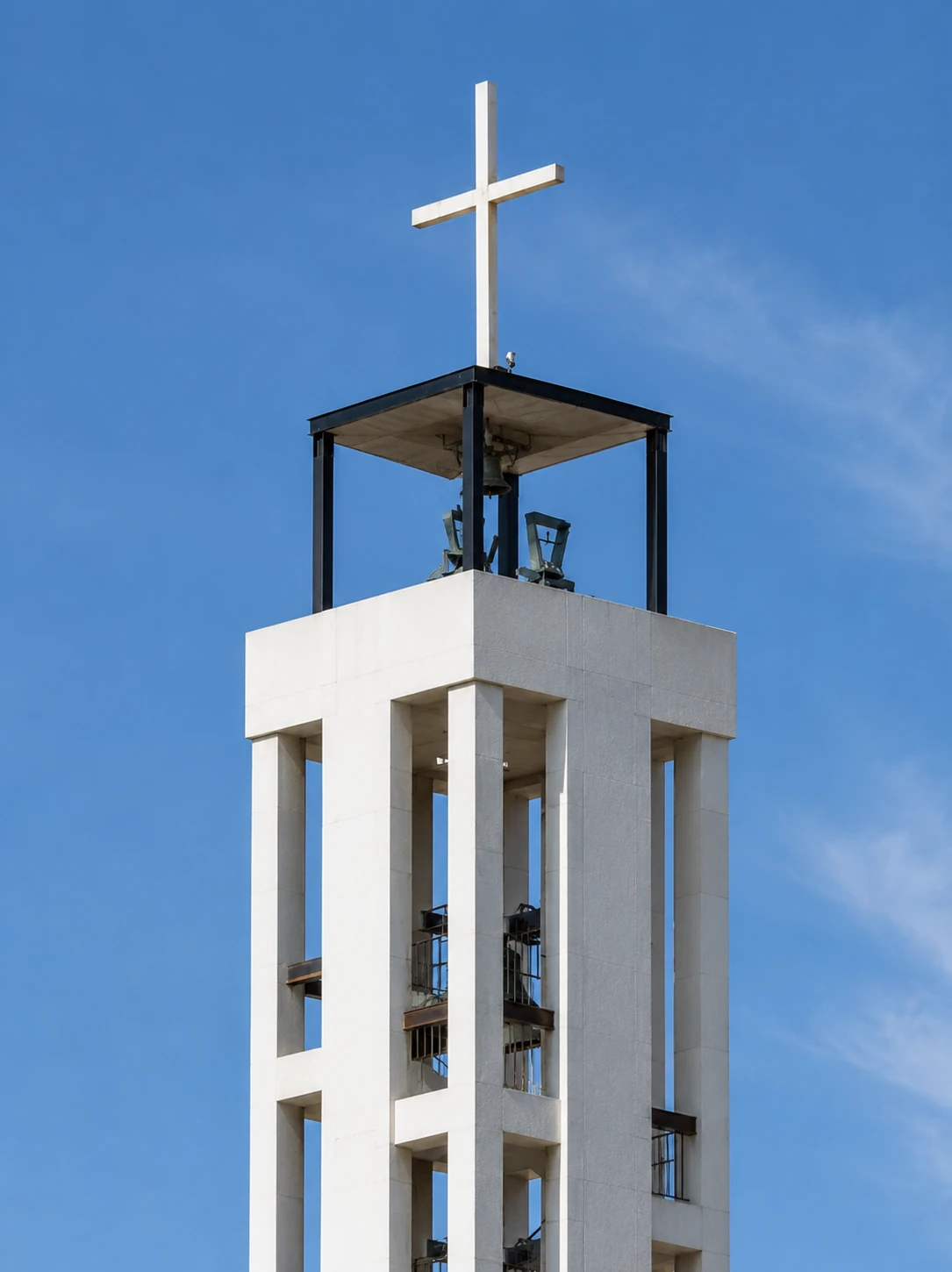
The tower is positioned at the corner of greatest visibility — the one facing directly onto the roundabout — and articulates its volume through a composition of openings and setbacks that accommodate the bells and create a recognisable vertical profile in the urban landscape of the neighbourhood. The cross on the crown, in white concrete, becomes the highest point of the composition and a visual reference from the approach roads.
The building shares a close formal and conceptual relationship with Spanish religious architecture of the period, particularly the work of Miguel Fisac: the same desire for synthesis between structural modernity and sacred decorum, the same attention to light as a design material.