Artificial Intelligence in Architecture: Between the Image and the Project
Only a few years ago, producing several image options for a house could mean days of modelling, adjusting materials and lighting. Today, some artificial intelligence tools can generate different alternatives within minutes. The change is considerable and hard to ignore.
AI is entering architecture studios by very different routes. It first caught attention for its ability to generate images, but its applications go well beyond that: from processing documentation to automating tasks, analysing information or supporting design.
The interesting question is no longer whether we will use these tools, but what place they should have within the design process.
Images that convince, but do not always work
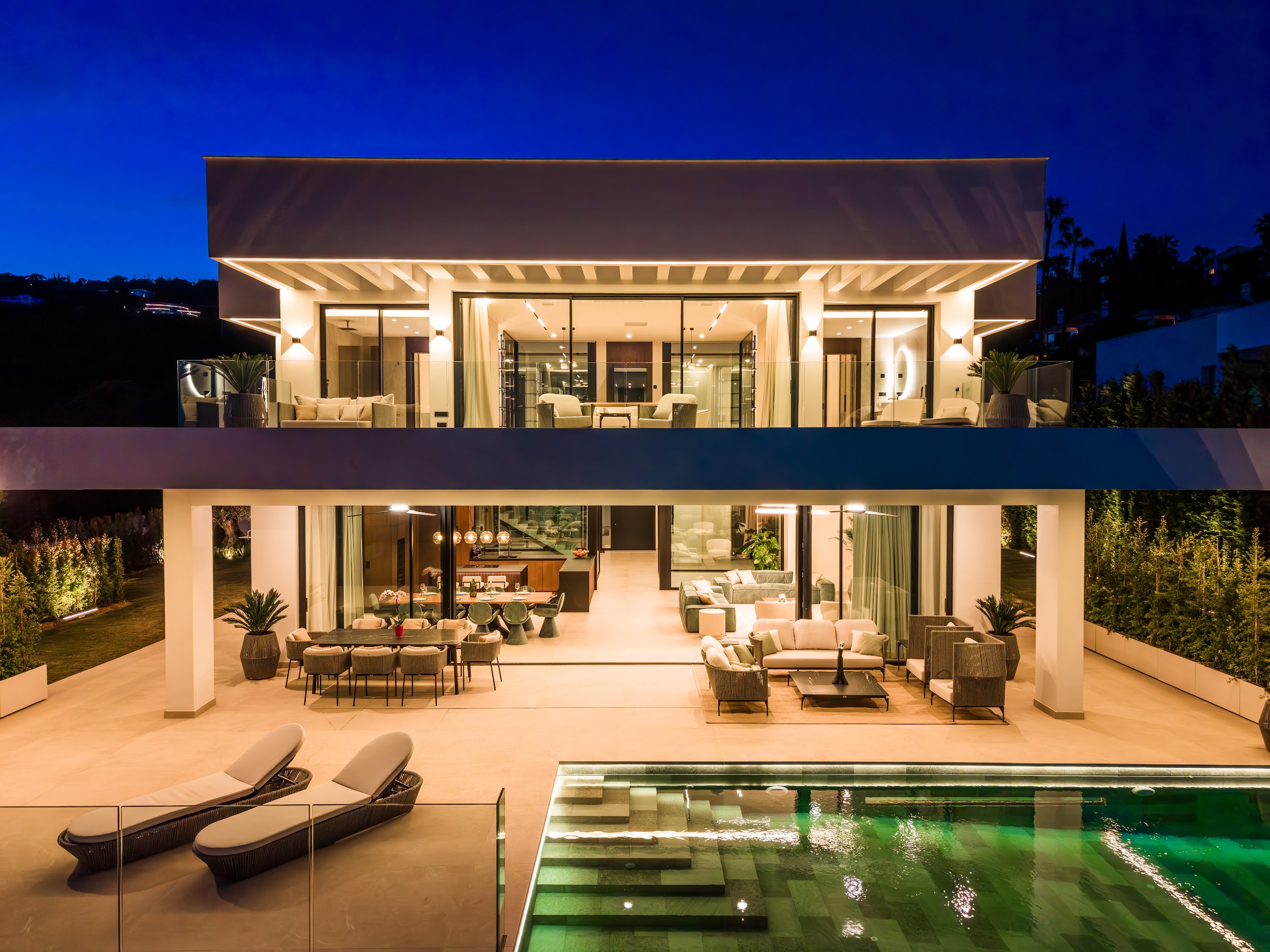
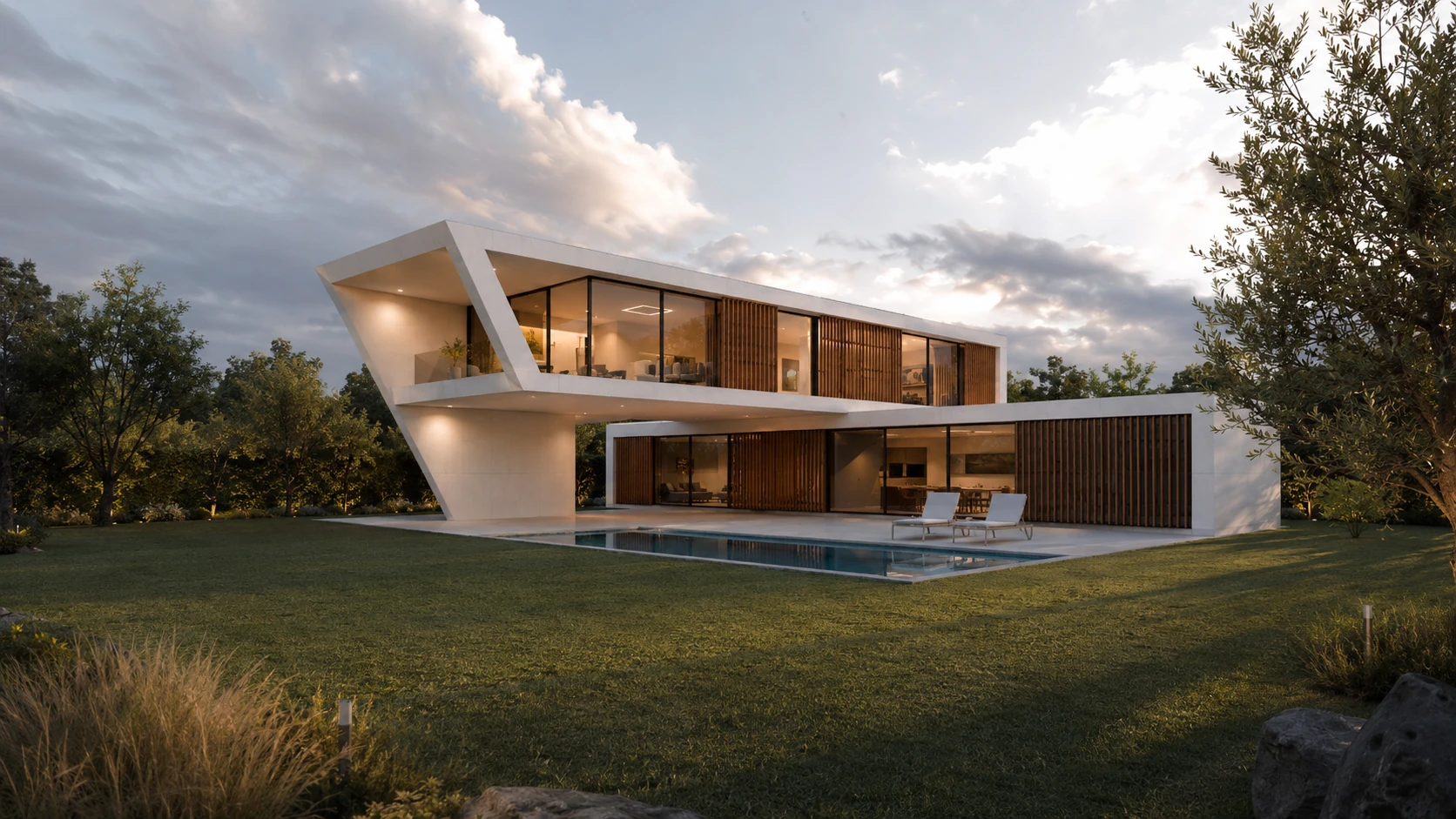
Perhaps the best-known use of AI in architecture is image generation. A reasonably precise description is enough to produce proposals for houses, interiors or buildings with a visual quality that, not long ago, would have demanded far more work.
This has clear advantages. It makes it possible to study atmospheres, compare materials and explore solutions that might not have been considered at first. It also helps communication with the client, especially in the first conversations, when ideas are still loosely defined.
The problem appears when we confuse that image with a project.
Think of a house on a steeply sloping plot, something common in certain areas of the Costa del Sol. An image may show a house with large cantilevers, fully glazed façades and a pool suspended over the landscape. The result can be attractive, but many questions remain unanswered.
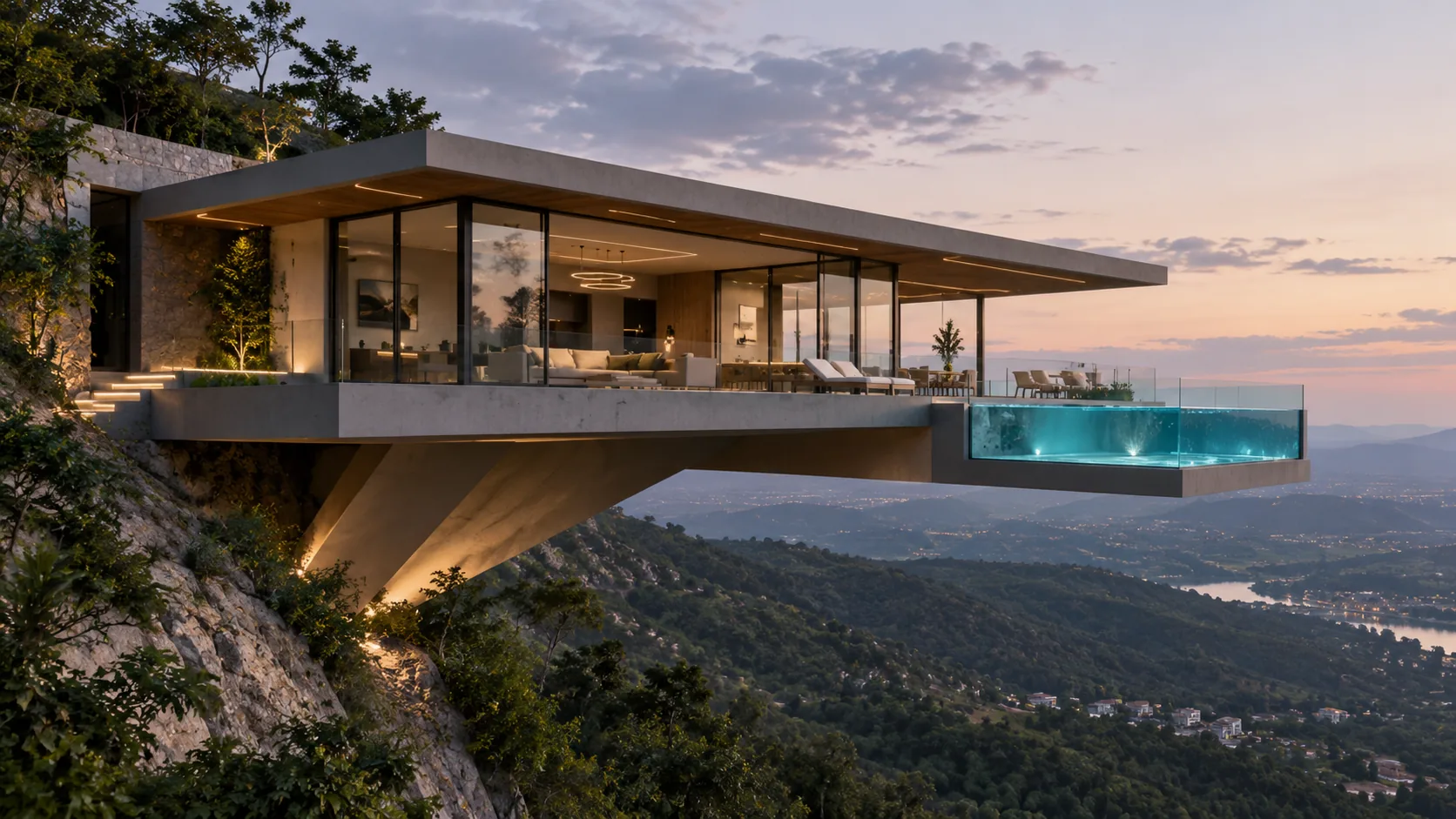
Does it comply with the planning regulations? How is the structure resolved? What would it cost to build? How is it protected from the sun? Is that solution suited to the existing topography?
These are questions that are hard to see in an image and that can completely shape how the project develops.
This does not make the tool any less useful. It simply means understanding what each thing is for.
Beyond renders
Although images are its most visible application, some of the most interesting possibilities of artificial intelligence probably lie in less eye-catching tasks.
Architecture projects generate and handle an enormous amount of information: regulations, reports, drawings, quantities, technical data sheets, administrative paperwork and data from different disciplines.
AI can help to search that information, organise documents, spot possible inconsistencies or speed up certain repetitive jobs. Its integration with BIM modelling tools also opens up possibilities in process automation and technical coordination.
Even so, some caution is advisable. These tools can make mistakes, misread a document or present incorrect information as correct. On planning and construction matters, an answer that sounds convincing cannot be taken as valid without checking it.
That is why we find its capacity to improve the way we work more interesting than the simple possibility of producing results ever faster.
Judgement still lies in the decisions
An architecture project is a succession of decisions, many of them linked to one another.
The position of a house on its plot affects its orientation, earthworks, access and views. A change to the layout can alter the structure or the services. The choice of a material influences the budget, the maintenance and the way the building ages.
On top of this come less obvious matters: the particular needs of the client, the conditions of an existing building, the budget available or the circumstances of each municipality.
Professional experience consists, to a large extent, of knowing how to relate all those factors and find a balanced solution. And also of recognising when an idea, however attractive, is not worth carrying out.
Artificial intelligence can offer alternatives and information to support those decisions. What matters is that there is judgement behind how it is used.
A tool we are still learning to use
We are in a period of rapid change. Some applications that seemed experimental not long ago are already part of many professionals' daily work, while others still need to mature before they are truly reliable.
Questions also arise that should not be overlooked: the authorship of images, the confidentiality of documentation, the accuracy of results or dependence on particular platforms.
At Santos-Rein Arquitectos we have been incorporating digital tools into our work for years, especially through BIM methodology and architectural visualisation. Artificial intelligence is a new line of development worth exploring, provided it adds something to the project and does not become an end in itself.
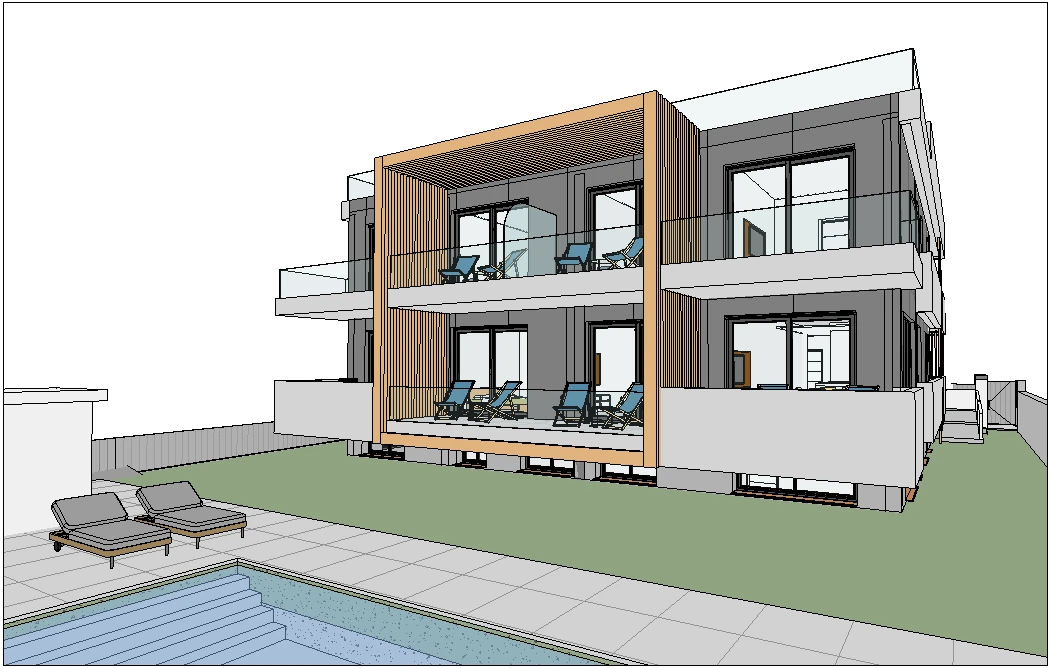
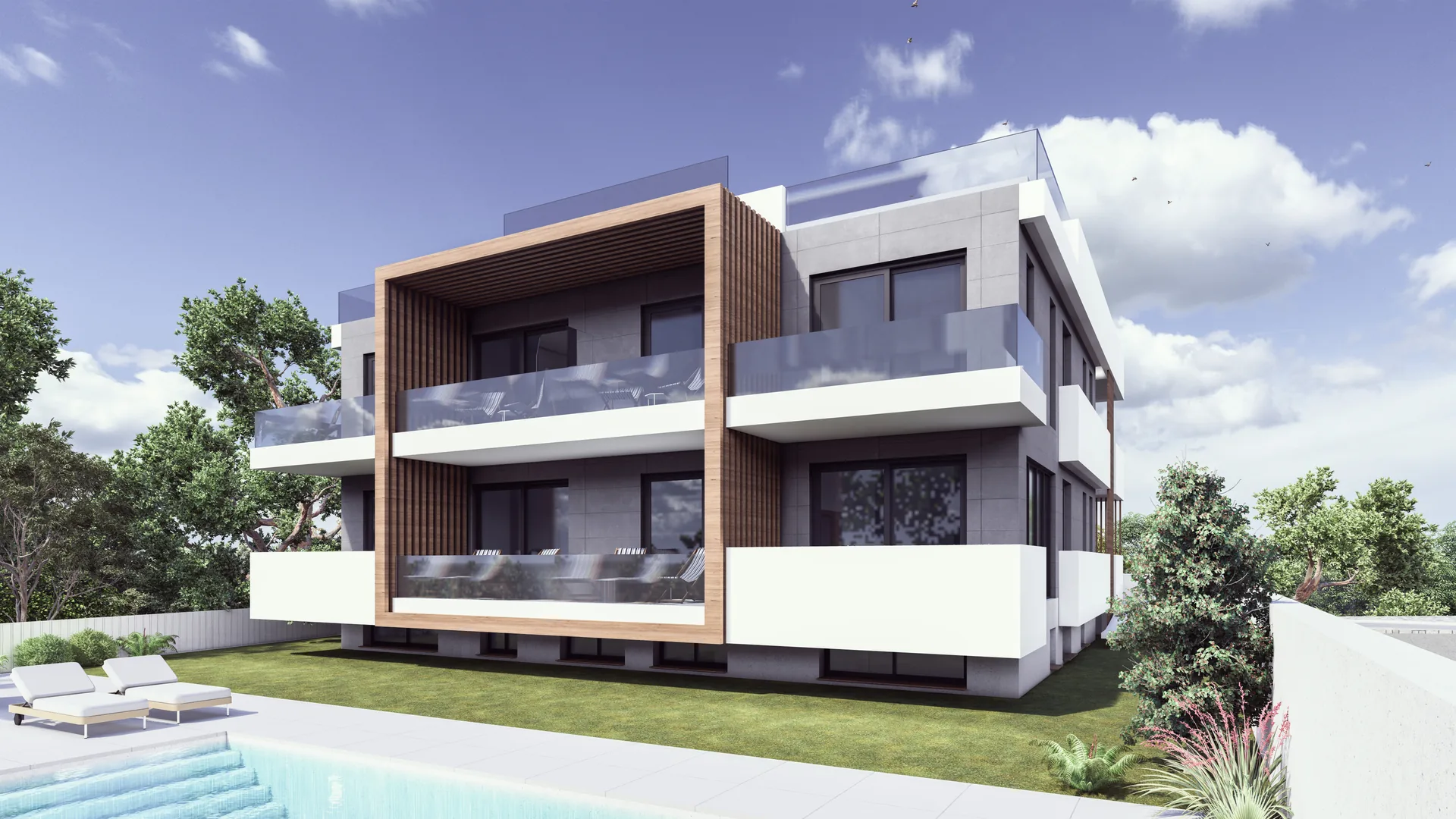
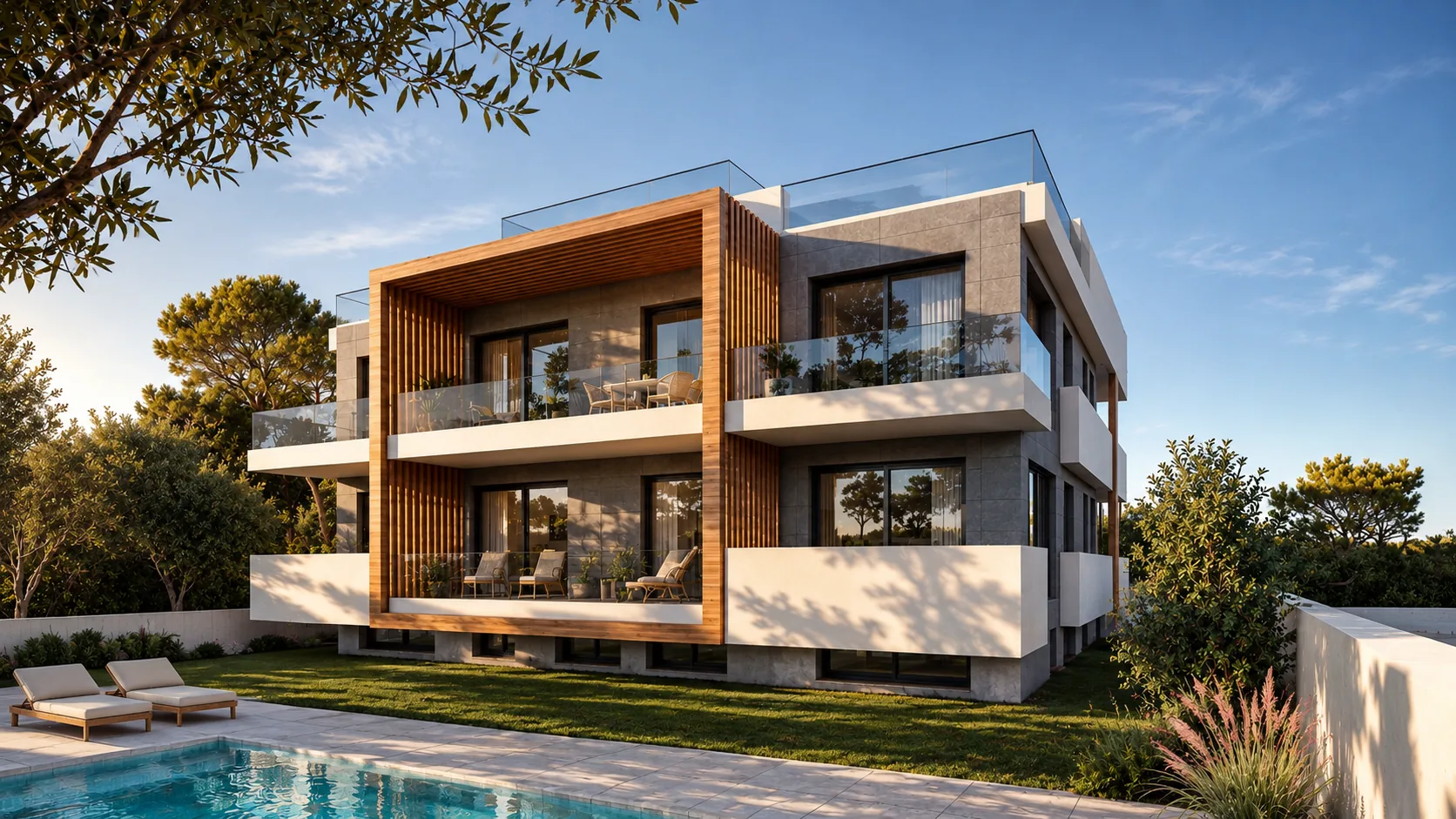
As an example, here is the path of one of our projects, from the model to the final render produced with the help of AI:
We are particularly interested in its potential to ease tasks that consume time without necessarily adding architectural quality, to improve how information is handled and to study alternatives in the early phases.
It is not a matter of using AI because it is fashionable, but of finding applications that genuinely improve the work.
Where are we heading?
It is hard to know how far this technology will go in the coming years. What seems clear is that some everyday tasks in studios are going to change, probably faster than we imagine.
That does not mean every project will be designed automatically, or that the architect will become a mere supervisor of computer-generated images.
Perhaps the most interesting change is a different one: having more tools to study possibilities, solve problems and give more attention to the decisions that really determine the quality of a building.
In the end, the client does not much mind whether an image was generated with one program or another. What matters to them is that their home works, that the project is viable, that the budget makes sense and that the construction is carried out properly.
And that remains, whatever tools we use, the essence of our work.
Thinking about building a home in Málaga or on the Costa del Sol? Discover our detached homes and villas service in Málaga or get in touch with the studio.